
Future of Creator Social Tokens: How Web3 Is Rewiring the Creator Economy in 2026
Remember when buying a concert ticket was just about getting into the venue? In 2026, that model feels ancient. Today, fans don’t just watch; they own. They hold stakes. They vote. This shift isn’t driven by record labels or ad networks-it’s powered by creator social tokens, fungible digital assets issued by creators to monetize their brand and deepen community engagement. These tokens are no longer niche experiments for crypto enthusiasts. They are becoming the backbone of a new economic layer where artists, influencers, and thought leaders bypass traditional gatekeepers entirely.
The promise is simple but radical: direct alignment between a creator’s success and their audience’s financial interest. When you buy a social token, you aren’t just donating. You’re investing in the person’s future output. But as we move deeper into the mid-2020s, the landscape has changed dramatically from the chaotic early days. The question is no longer “what are these?” but “how do they survive regulation, volatility, and burnout?”
What Exactly Are Creator Social Tokens?
To understand where this is going, we need to strip away the hype. A social token is a fungible cryptocurrency tied directly to an individual or community. Unlike an NFT, which represents unique ownership of a specific item (like a digital painting), a social token is like a share of stock in a company-except the company is a person.
Here is the core mechanic:
- Fungibility: One token is equal to another. If you hold five $MKBHD tokens, they are interchangeable with my five $MKBHD tokens. This makes them easy to trade and use as currency within a community.
- Utility over Speculation: While price matters, the real value lies in access. Holding the token might unlock a private Discord channel, early access to music drops, or voting rights on what song gets released next.
- Direct Monetization: Creators mint these tokens and sell them directly to fans. The revenue goes to the creator, not a platform taking a 30% cut.
This structure creates a "personal economy." It transforms passive followers into active stakeholders. Andreessen Horowitz, a leading venture capital firm, has long argued that this model allows creators to retain ownership of their audience data and monetization channels, effectively turning their personal brand into a tradable asset class.
How Valuation Actually Works in 2026
In the early days of social tokens, prices were purely speculative. People bought them hoping they would moon. That era is mostly over. Today, valuation is driven by utility and supply dynamics. Understanding this is crucial for both creators issuing tokens and fans holding them.
The price of a social token is determined by basic market forces: demand versus supply. However, creators have powerful tools to manipulate this balance strategically.
| Factor | Mechanism | Impact on Price |
|---|---|---|
| Token Burning | Creator buys back tokens and destroys them, reducing total supply. | Increases scarcity, potentially raising price if demand holds. |
| Airdrops | Creator distributes free tokens to loyal fans to reward engagement. | Increases supply, potentially lowering price, but boosts community loyalty. |
| New Utility Launches | Adding new perks (e.g., exclusive merch, governance votes). | Increases demand, driving price up. |
| Creator Growth | More followers mean more potential buyers. | Positive correlation with price, assuming token awareness spreads. |
For example, if a musician launches a new album campaign, they might announce that only token holders can pre-order vinyl. This spikes demand. Conversely, if they burn 10% of the circulating supply during a live stream, they signal confidence and reduce inflation. This dynamic requires creators to act less like artists and more like central bankers for their own micro-economies.
The Rise of Institutional Capital and Stability
One of the biggest hurdles for social tokens was volatility. Fans didn’t want to support their favorite podcaster only to see their investment drop 50% overnight. This uncertainty kept mainstream audiences at bay. However, 2026 has seen a significant shift with the entry of institutional players.
Enterprises like Capital Trust Group Limited have begun bridging the gap between traditional finance and the creator economy. By creating pools of institutional funding specifically for YouTube creators and other high-profile influencers, they are introducing stability. Their initiative involves issuing digital bond licenses that are backed by real cash flow projections rather than pure speculation.
This is a game-changer. It means a creator can tokenize their future earnings without exposing their fans to wild crypto swings. Instead of buying a volatile token, a fan might buy a "bond" that guarantees a small return based on the creator’s ad revenue or merchandise sales. This hybrid approach merges the trustless nature of blockchain with the predictability of traditional finance.
Infrastructure Evolution: From Wallets to DeSoc Platforms
Early social tokens required users to download complex wallets, manage seed phrases, and pay gas fees on Ethereum. This friction killed adoption for non-crypto natives. The solution? Decentralized Social Media (DeSoc) platforms.
Platforms like Zora Network have emerged as hybrids of Instagram, X (formerly Twitter), and crypto exchanges. On Zora, creating a social token is as easy as posting a tweet. The wallet infrastructure is abstracted away. Users log in with email or phone numbers, and the platform handles the backend blockchain interactions.
This abstraction is critical. It allows creators to focus on content while the technology handles the economics. Zora and similar networks ensure fair value distribution by allowing creators to set custom rules for token issuance. For instance, a creator can decide that 50% of secondary trading fees go back to them, creating a perpetual revenue stream every time fans trade tokens among themselves.
Social Token 2.0: Governance and Brand Integration
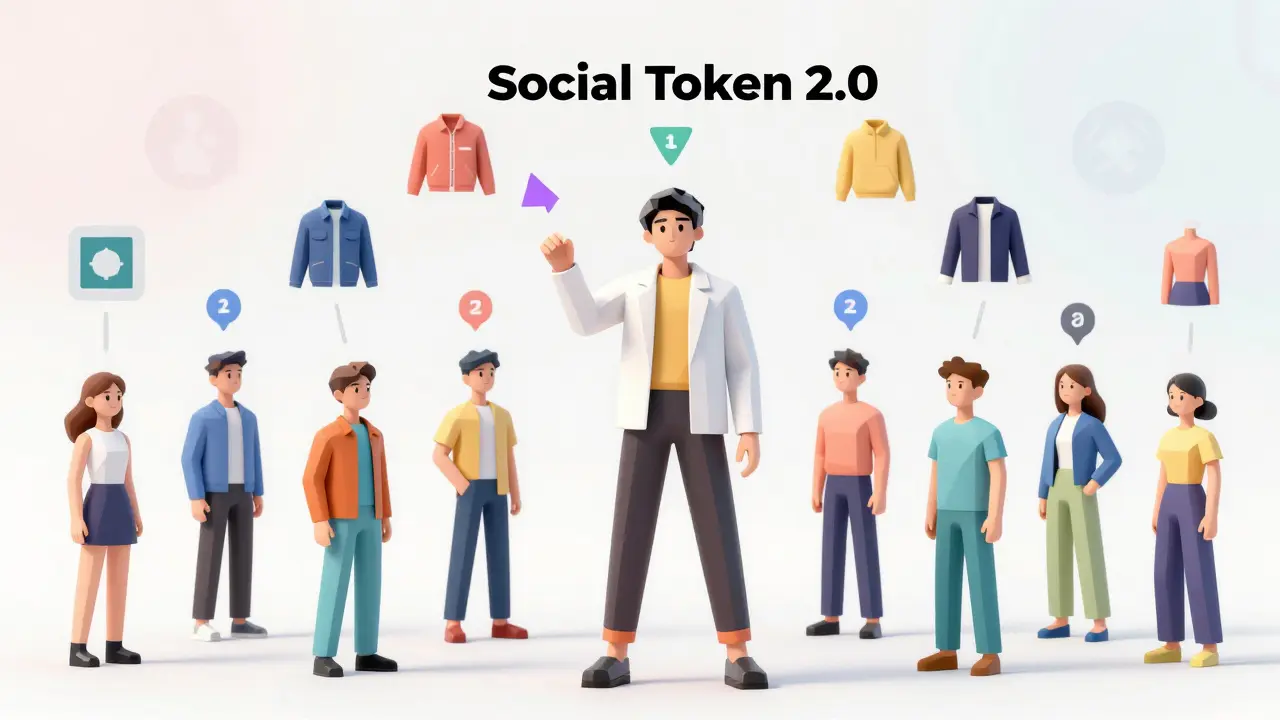
We are moving beyond simple "access passes." The next phase, often called Social Token 2.0, focuses on governance and brand integration. Here, tokens become voting shares.
Imagine a fashion influencer who issues tokens. Holders don’t just get discount codes; they vote on which designs go into production. If the community votes for a red jacket, the influencer produces it. This reduces risk for the creator and increases engagement for the fan. The token becomes a tool for co-creation.
Brands are also jumping in. Instead of paying an influencer a flat fee for a post, companies are issuing their own tokens to be used within the influencer’s ecosystem. This creates a deeper, long-term partnership. The influencer promotes the brand’s token, and the brand rewards the influencer’s community with utility. It’s a symbiotic loop that replaces one-off sponsorships with ongoing economic relationships.
Challenges: Regulation, Burnout, and Volatility
Despite the progress, significant headwinds remain. Regulatory uncertainty is the elephant in the room. As social tokens gain financial characteristics, regulators in the US and EU are scrutinizing them. Are they securities? If so, creators could face legal risks for unregistered offerings. Clear guidelines are still emerging, and many creators operate in a gray area.
Then there is the human element: burnout. Running a token economy requires constant engagement. Creators must deliver value regularly to maintain token demand. If a creator steps away for a month, the token price may crash, leading to angry holders. This pressure can accelerate burnout, forcing some creators to sell their digital legacies at reduced valuations or abandon tokenization altogether.
Market volatility remains a barrier too. Even with institutional backing, the broader crypto market affects sentiment. A bear market can drain liquidity from social tokens, making it hard for creators to raise funds. Education is key here. Fans need to understand that supporting a creator via tokens is different from buying Bitcoin. It’s closer to buying a membership with financial upside, not a safe harbor investment.
Future Trajectory: 2026 and Beyond
Looking ahead, social tokens are poised to become foundational infrastructure for decentralized communities. We expect to see:
- Cross-Platform Portability: Tokens that work across multiple apps, not just one siloed platform.
- AI-Driven Analytics: Tools that help creators optimize tokenomics based on real-time engagement data.
- Regulatory Clarity: New frameworks that protect investors while allowing innovation to flourish.
- Mainstream Adoption: As wallets become invisible, social tokens will feel like normal features of social media, not exotic crypto experiments.
The convergence of institutional capital, better UX, and clearer utility suggests that social tokens will transition from niche tools to standard practice for serious creators. They offer a path to financial independence that doesn’t rely on algorithm changes from tech giants. For fans, they offer a way to truly participate in the stories and art they love.
Are social tokens legal investments?
The legality depends on your jurisdiction and how the token is structured. In many regions, if a token promises profit solely from the efforts of others, it may be classified as a security. Creators should consult legal experts. Currently, many operate under utility models where value comes from access and perks, not just financial gain, to mitigate regulatory risk.
How do I buy a creator's social token?
You typically need a crypto wallet compatible with the blockchain the token is built on (often Ethereum, Polygon, or Solana). Many modern platforms like Zora allow you to connect a wallet and purchase tokens directly through their interface using credit cards or crypto. Always verify the official contract address to avoid scams.
What happens if a creator stops posting?
If a creator becomes inactive, demand for their token usually drops, causing the price to fall. Unlike stocks, there is no board of directors to force action. The community may try to revive the project, or the token may become worthless. This is why due diligence on the creator’s track record is essential.
Can brands issue social tokens?
Yes. Brands are increasingly using social tokens as advanced loyalty programs. Instead of points that expire, brands issue tokens that can be traded, collected, or used for exclusive experiences. This creates a more engaged and financially invested customer base.
Is it better to buy NFTs or social tokens from a creator?
It depends on your goal. NFTs are for collecting unique items and proving ownership of specific works. Social tokens are for ongoing access, community participation, and supporting the creator’s general output. Many fans hold both: NFTs for memorabilia and social tokens for active engagement.