
FATF Blacklist Impact on Iranian Crypto Users: Risks & Workarounds
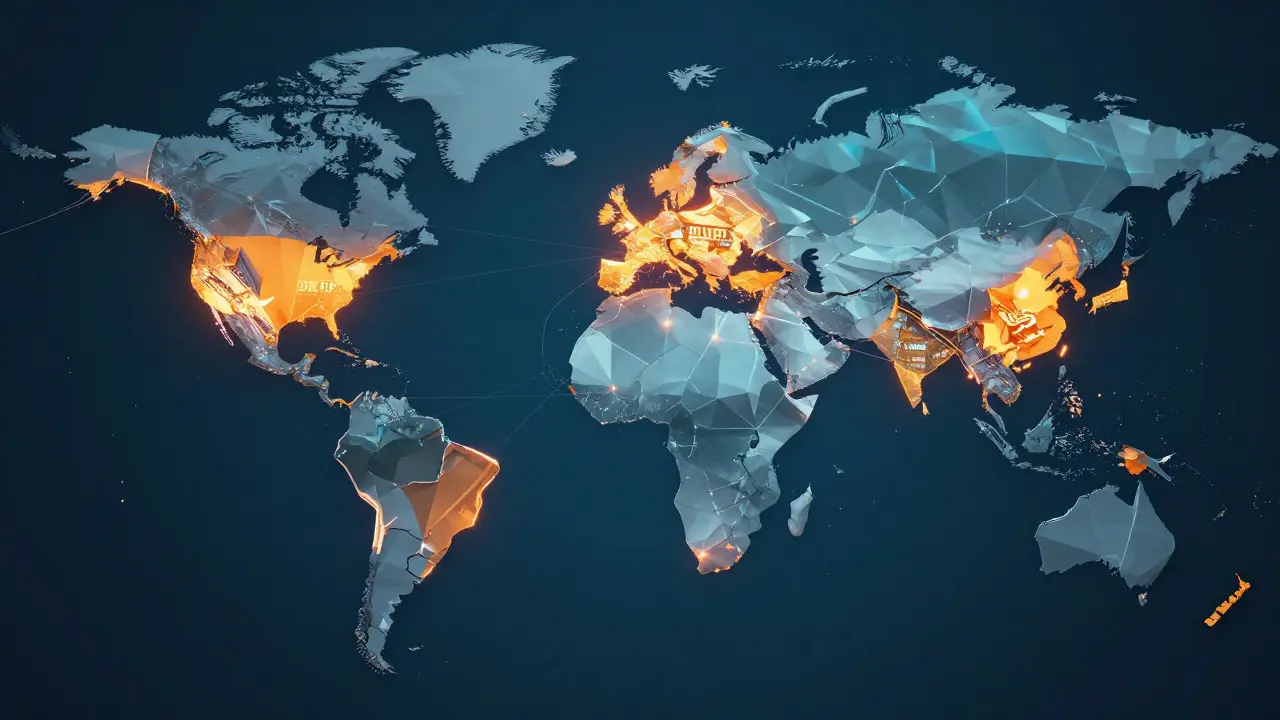
Imagine trying to send money abroad for a medical procedure or pay for imported goods, only to find your bank account frozen because of a label applied by an international watchdog. For millions in Iran, this isn't a hypothetical scenario; it's daily reality. The FATF blacklist is a designation by the Financial Action Task Force identifying countries with severe gaps in anti-money laundering controls. Since October 2019, Iran has sat on this list, effectively cutting off its traditional banking channels from the global system.
This isolation didn't kill financial exchange; it forced a pivot. Cryptocurrency became the lifeline. But what does this actually mean for you if you live in Tehran, Isfahan, or anywhere else in Iran? It means navigating a complex web of high risks, technical hurdles, and constant surveillance. This guide breaks down how the FATF designation shapes your crypto experience, the real costs involved, and the practical steps you can take to keep your assets moving safely.
The Core Problem: Why the Blacklist Matters for Your Wallet
To understand the friction you face, you have to look at why the Financial Action Task Force (FATF) exists. It’s the global standard-setter for combating money laundering and terrorist financing. When a country lands on the "Call for Action" list (the formal term for the blacklist), it signals that its regulatory framework is severely deficient. For Iran, this stems from failing to implement a 2016 action plan, a status that remains active as of late 2025.
The direct consequence is the severing of conventional payment rails. Systems like SWIFT, which handle most international bank transfers, are largely inaccessible. According to EPC Analysis, this has amounted to the closure of monetary exchange windows with the EU under any conventional framework. So, when you want to buy something from abroad or send remittances to family overseas, the old way is gone. You are left with two options: use informal hawala networks with high counterparty risk, or turn to cryptocurrency.
However, the blacklist doesn't just block banks; it triggers mandatory enhanced due diligence for any global financial institution touching Iranian entities. This creates a paradox for crypto users. On one hand, crypto offers a censorship-resistant alternative. On the other, major exchanges must comply with FATF's "travel rule," which requires them to track the origin and destination of funds above certain thresholds. If an exchange identifies an Iranian IP address or KYC document, they may freeze the account to avoid penalties. This tension between necessity and compliance is the central conflict defining the Iranian crypto landscape today.
How Adoption Has Surged Amidst Restrictions
Far from suppressing crypto use, the FATF blacklist has accelerated it. Data from Chainalysis shows that sanctioned jurisdictions, with Iran as the primary driver, received $15.8 billion in cryptocurrency transactions during 2024. That figure represents 39% of all illicit crypto activity globally, marking a 22% year-over-year increase from 2023.
For individual users, this translates to a massive shift in behavior. Monthly outflows from Iranian centralized exchanges jumped from $290 million in January 2024 to over $480 million by December 2024. Bitcoin remains the dominant asset, accounting for 78% of these transactions due to its strong network effect and resistance to censorship. Ethereum makes up about 14%, while privacy coins like Monero hold a smaller but significant share for those seeking extra opacity.
| Metric | Data Point | Source/Context |
|---|---|---|
| Total Sanctioned Jurisdiction Inflow (2024) | $15.8 Billion | Chainalysis Crypto Crime Report |
| Iran's Share of Sanctioned Inflows | 58% ($9.2 Billion) | Chainalysis, 2025 |
| Estimated Adult Crypto Users | 18.7 Million (42%) | Statista, Oct 2025 |
| Average Transaction Value | < $1,500 | KPMG Regulatory Insights |
| Primary Device Usage | 92% Mobile Wallets | On-chain Analytics |
Notice the average transaction value staying under $1,500. This isn't accidental. Users are deliberately fragmenting their capital movements to stay below detection thresholds that might trigger automated flags on global exchanges. It’s a survival tactic born from years of navigating a hostile regulatory environment.

Navigating the Technical and Operational Hurdles
Using crypto in Iran isn't as simple as downloading an app and buying Bitcoin. The infrastructure itself poses challenges. Internet access often requires registered SIM cards, and state monitoring tools can throttle connections during peak hours. Reports indicate that 74% of users experience transaction failures between 8 and 10 PM Tehran time, likely due to bandwidth management by the Central Bank.
Most users rely on mobile wallets like Trust Wallet or Exodus. These non-custodial solutions give you control over your keys, which is crucial when dealing with unregulated domestic exchanges. However, mastering seed phrase management is a steep learning curve. Surveys from the Iran Blockchain Academy suggest it takes the average new user 72 hours to become proficient, with 61% needing technical help just to secure their first wallet properly.
Domestic exchanges like Nobitex and Wallex operate under specific local frameworks. While convenient for fiat-to-crypto entry, many prohibit cross-border transfers directly. This forces users to move funds to offshore platforms like Binance or Bybit. But here lies the trap: verifying your identity (KYC) on these global platforms exposes you to both Iranian authorities and FATF-compliant freezing mechanisms. A September 2025 survey found a 33% account freeze rate among Iranian users on global exchanges, often triggered by routine compliance checks rather than suspicious activity.
Practical Strategies for Safer Transactions
So, how do you move money without getting caught in the net? There is no perfect solution, but there are safer paths. Many experienced users have shifted toward peer-to-peer (P2P) trading and decentralized exchanges (DEXs).
- Peer-to-Peer (P2P) Trading: Platforms like LocalBitcoins allow you to trade directly with other users. Success rates are around 78%, but expect premiums of 22% on top of market price. This cost buys you anonymity and bypasses centralized KYC bottlenecks.
- Decentralized Exchanges (DEXs): Using DEXs like PancakeSwap removes the middleman entirely. However, liquidity is thinner, leading to higher slippage (around 15%). You need to be comfortable reading smart contracts and managing gas fees.
- Multi-Hop Atomic Swaps: Advanced users employ atomic swaps to move assets through multiple jurisdictions without custody. One user reported moving 2.3 BTC to Turkey in 17 minutes using this method, though it carries a 15-20% premium due to complexity and risk.
Community-driven tools also play a vital role. Repositories like 'IranCryptoKit' on GitHub provide localized node configurations that help bypass national firewalls. While useful, 37% of users report security compromises from using unvetted third-party apps, so always audit the code before trusting it with your life savings.

The Future Outlook: Will Things Get Better?
As of mid-2026, the situation remains tense. Iran has taken some steps toward compliance, such as conditionally approving the Convention for Suppression of the Financing of Terrorism in March 2025. However, FATF has not publicly acknowledged enough progress to remove the blacklist status. Experts remain divided on the long-term impact.
Dr. Emad Kiyaei argues that the blacklist has become counterproductive, accelerating crypto adoption without reducing proliferation risks. Conversely, FATF President Raja Kumar maintains that strict countermeasures are necessary. For the average user, the outlook suggests continued reliance on crypto as the de facto international payment infrastructure. With 93% of surveyed users stating they would increase crypto usage if the blacklist persists through 2026, the dependency is deepening, not fading.
The introduction of state-backed initiatives, like the pilot "Halal Stablecoin" pegged to gold, adds another layer of complexity. While it aims to provide a compliant local option, it remains isolated from global liquidity pools. Until Iran secures its removal from the FATF list or achieves full regulatory alignment, crypto will remain a high-stakes, high-reward tool for everyday financial life in Iran.
Frequently Asked Questions
Is cryptocurrency legal in Iran?
Yes, cryptocurrency is legal in Iran. The government has licensed domestic exchanges and even piloted a state-backed stablecoin. However, the legality does not exempt users from FATF-related international restrictions, which affect cross-border transactions more than domestic ones.
Why do global exchanges freeze Iranian accounts?
Global exchanges freeze accounts to comply with FATF's "travel rule" and anti-money laundering regulations. Since Iran is on the blacklist, institutions face higher penalties for non-compliance. Often, freezes occur automatically based on IP geolocation or KYC data, even if the user was engaging in legitimate trade.
What is the safest way to store crypto in Iran?
Non-custodial hardware wallets or well-managed mobile wallets (like Ledger or Trezor) are generally considered safer than keeping funds on centralized exchanges. Hardware wallets protect against exchange hacks and account freezes, provided you securely manage your seed phrase offline.
Does the FATF blacklist affect domestic trades?
Directly, no. The blacklist primarily targets international financial flows and correspondent banking. Domestic trades between Iranian users on local exchanges are less impacted by FATF rules, though they are subject to local tax and regulatory changes. The main pain point is moving assets across borders.
Can I use DeFi to bypass FATF restrictions?
Partially. Decentralized Finance (DeFi) protocols are permissionless, meaning they don't require KYC. However, entering and exiting DeFi usually involves bridging assets through centralized exchanges or P2P markets, where FATF compliance still applies. Additionally, network-level monitoring can make frequent DeFi interactions visible to local authorities.