
Dollar-Cost Averaging While HODLing: The Simple Way to Build Crypto Wealth Without Timing the Market
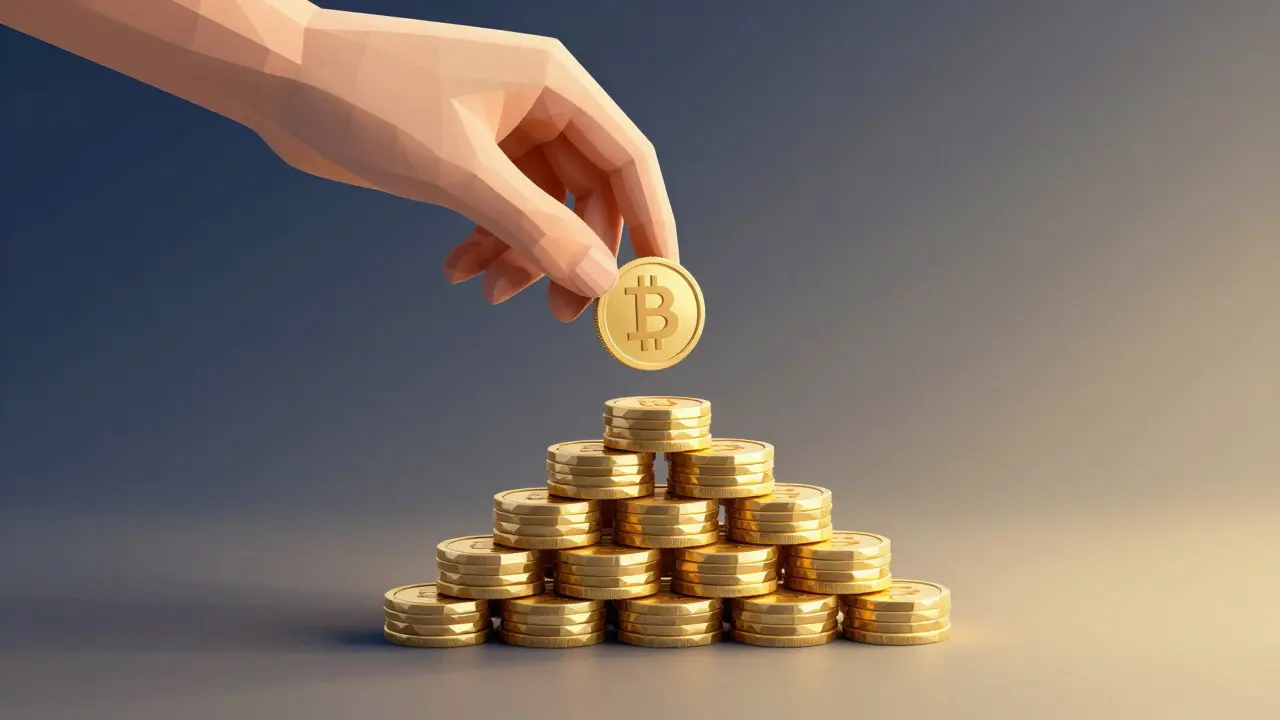
Imagine buying Bitcoin every month, no matter if it’s at $30,000 or $60,000. You don’t check the price before you buy. You don’t wait for a dip. You don’t panic when it drops 20% in a week. You just keep buying. That’s dollar-cost averaging while HODLing-and it’s how most people actually get rich in crypto, not by guessing the bottom, but by showing up consistently.
Most beginners think they need to time the market. They watch charts, wait for news, delay buying until the "right moment." But crypto doesn’t care about your timing. It swings 30% in a day. One week it’s all headlines about ETFs, the next it’s a 15% crash because a big holder sold. If you wait for perfect conditions, you’ll miss years of growth. Dollar-cost averaging (DCA) fixes that. You stop guessing. You start accumulating.
What Dollar-Cost Averaging Actually Does
Dollar-cost averaging means buying the same dollar amount of an asset at regular intervals-weekly, biweekly, or monthly-no matter what the price is. If Bitcoin is $40,000, you buy $100 worth. If it drops to $30,000, you still buy $100 worth. That means you get more Bitcoin when it’s cheap. When it’s expensive, you get less. Over time, your average cost per coin smooths out.
Let’s say you have $50,000 to invest in Bitcoin. You could buy it all at once when it’s at $50,000 per coin. You’d get 1 Bitcoin. But what if it drops to $25,000 a month later? You just lost 50% of your value on paper. Now you’re tempted to sell or stop investing.
Now try DCA: You split that $50,000 into five $10,000 buys at these prices: $50,000, $45,000, $25,000, $25,000, and $55,000. You end up with 1.4 Bitcoin. Your average cost? $40,000 per Bitcoin. Even though the price ended higher than your first buy, you still got more coins than if you’d bought all at once. That’s the power of buying more when prices fall.
Why HODLing Is the Perfect Partner
HODLing-yes, it came from a typo in a 2013 Bitcoin forum post-means holding your crypto for the long term, no matter what. It’s not about making quick trades. It’s about ignoring noise. When you combine DCA with HODLing, you’re not trying to flip coins. You’re building a position slowly, steadily, and emotionally safely.
Most people who lose money in crypto do it because they panic-sell during crashes or FOMO-buy at peaks. DCA removes both. You don’t sell because you’re not watching the price every hour. You don’t buy too much at the top because you’re only spending your fixed amount. You just keep adding.
Take the 2018 bear market. Bitcoin fell from nearly $20,000 to under $3,500. People who bought all at once in late 2017 watched their portfolios drop 80%. But people using DCA kept buying $100 every week. By mid-2021, when Bitcoin hit $60,000, their average cost was under $10,000. They didn’t need to time the bottom. They just kept buying.
How to Set It Up (Step by Step)
You don’t need a finance degree. You don’t need to understand candlesticks. Here’s how to start:
- Decide how much you can afford to invest monthly. Start small-$25, $50, $100. It doesn’t matter if it’s small. Consistency matters more than size.
- Pick a date. First of the month? Payday? Every Friday? Pick one and stick to it.
- Choose your crypto. Bitcoin and Ethereum are the most common. They’re the most liquid, the most tracked, and the most likely to hold value long-term.
- Use automation. Most exchanges-Coinbase, Kraken, Binance, Gemini-let you set up recurring buys. You set the amount, the frequency, and it happens automatically. No thinking. No emotion.
- Turn off price alerts. Seriously. If you’re checking your portfolio daily, you’re setting yourself up for stress. Check it once a quarter. Let it grow.
That’s it. No indicators. No news alerts. No YouTube gurus telling you to buy Solana because it’s "going to the moon." Just buy. Hold. Repeat.
DCA vs. Lump Sum: Which Wins?
Some people say, "Why not just buy all at once when you have the money?" It’s a fair question. If you bought Bitcoin in 2020 and held it, you’d have made 10x. If you DCA’d over that year, you still made 10x-but you didn’t have to buy at the exact bottom.
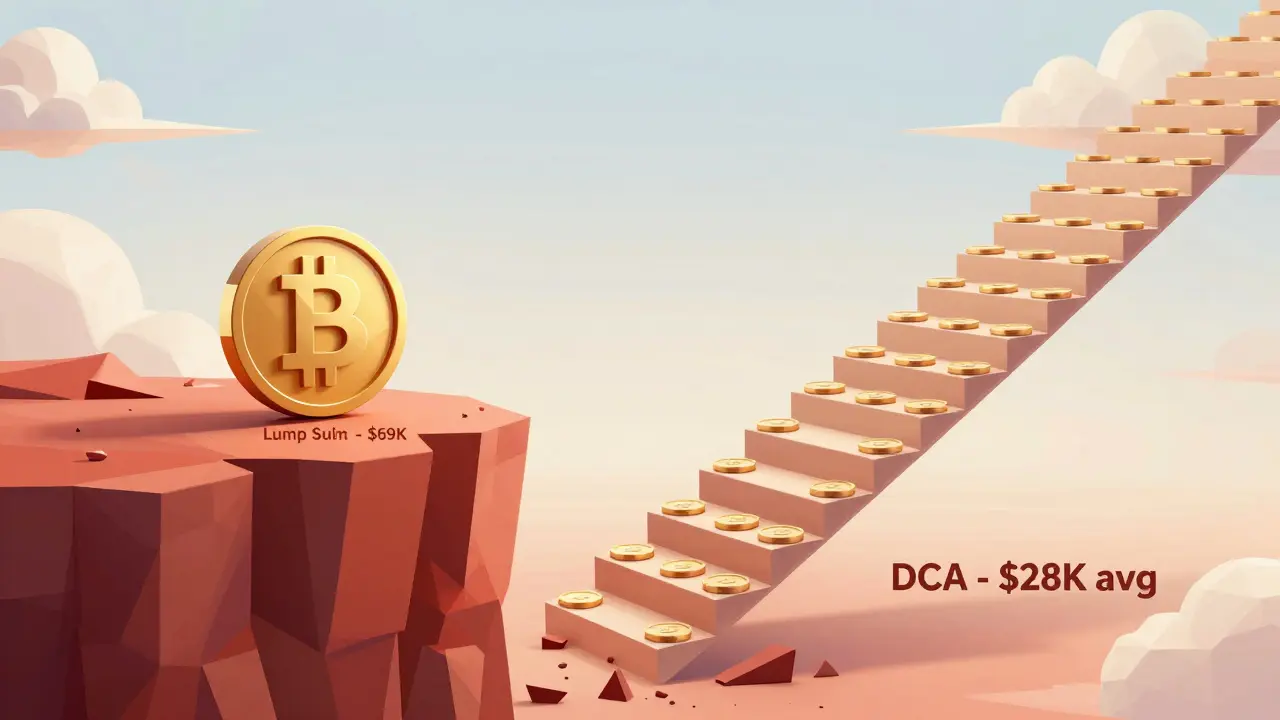
Here’s the truth: In a strong bull market, lump sum investing usually wins. You get more coins earlier. But here’s the catch-you have to get it right. If you bought Bitcoin at $69,000 in November 2021, you waited 2 years to break even. If you’d DCA’d $100 a week from January 2021 to December 2022, you’d have bought at an average of $28,000. You’d be sitting on a 150% gain by 2025.
DCA doesn’t promise higher returns. It promises fewer regrets. It protects you from bad timing. And in crypto, bad timing is the #1 reason people lose money.
What About Fees and Taxes?
You’ll pay a small fee on each purchase. Most exchanges charge 0.5%-1% per trade. That adds up. But it’s still cheaper than paying for a financial advisor or losing money from bad timing. If fees are a concern, use platforms like Kraken or Binance that offer lower fees for recurring buys.
Taxes? Yes, every purchase is a taxable event in the U.S. and many other countries. Each time you buy crypto, you’re creating a cost basis. When you eventually sell, you’ll need to report gains or losses. Use tools like CoinTracker or Koinly to track your buys automatically. They’ll calculate your average cost and generate reports for tax season. It’s not fun, but it’s necessary.
The Real Challenge: Staying Disciplined
The hardest part of DCA while HODLing isn’t the setup. It’s sticking to it when the market goes wild.
When Bitcoin surges 40% in a week, you’ll feel stupid for buying at $50,000 last month. You’ll see people on Twitter making 10x on meme coins. You’ll wonder if you’re missing out.
When Bitcoin crashes 30% in a weekend, you’ll feel like a fool for buying more. You’ll think, "Why throw good money after bad?"
That’s when most people quit. They stop DCAing. They sell. They wait for the "next time." And the next time never comes.
Successful DCA investors aren’t smarter. They’re just more consistent. They know the math works over time. They know volatility isn’t a threat-it’s an opportunity. They don’t need to be right every time. They just need to keep showing up.

Who This Strategy Is For
DCA while HODLing isn’t for everyone. It’s not for people who want to get rich quick. It’s not for day traders. It’s not for those who love analyzing charts.
It’s for:
- People who want to build crypto wealth without stress
- People who don’t have time to watch the market
- People who’ve lost money trying to time the market
- People who believe crypto has long-term value
- People who want to automate their investing
If you’re a beginner, this is the safest way in. If you’re experienced, this is the most reliable way to keep adding to your position without letting emotions rule you.
The Future of DCA in Crypto
As of 2025, nearly every major crypto exchange offers automated recurring buys. Some even let you link your paycheck directly-so 1% of every pay goes into Bitcoin automatically. DeFi platforms are starting to offer DCA through smart contracts, letting you buy crypto from decentralized exchanges without ever touching a centralized app.
Companies like MicroStrategy and Tesla have used DCA-style accumulation to build their Bitcoin holdings. They didn’t buy all at once. They bought in chunks over years. That’s not luck. That’s strategy.
Regulators are starting to recognize DCA as a responsible way to invest. It’s not speculation-it’s systematic saving. That’s why crypto IRAs and tax-advantaged crypto accounts are growing. They’re built for DCA.
This isn’t a fad. It’s the new normal for long-term crypto investing.
Final Thought: You Don’t Need to Be Right. You Just Need to Be Consistent.
The market doesn’t care if you bought at the bottom. It only cares if you’re still in the game.
Dollar-cost averaging while HODLing doesn’t guarantee you’ll become a millionaire. But it guarantees you won’t be the person who sold at the bottom. It guarantees you’ll own crypto when the next bull run hits. And that’s more than 90% of people can say.
Start small. Set it and forget it. Let time and compounding do the work. The market will keep swinging. But you? You’ll just keep buying.
Is dollar-cost averaging good for Bitcoin?
Yes. Bitcoin’s volatility makes DCA especially effective. Instead of trying to guess the right time to buy, you buy regularly and lower your average cost over time. Many investors who DCA’d Bitcoin from 2018 to 2021 ended up with 5x-10x returns, even though they bought during multiple crashes.
How often should I DCA crypto?
Monthly is the most common and easiest to manage. Weekly works if you get paid weekly. Biweekly fits well with paychecks. The key is consistency-not frequency. Pick one schedule and stick with it. Changing it too often defeats the purpose.
Should I DCA only Bitcoin or other coins too?
Start with Bitcoin and Ethereum. They’re the most stable, liquid, and widely accepted. Once you’re comfortable, you can add small amounts of other coins-but don’t spread yourself too thin. DCA works best when focused on proven assets.
Can I lose money with DCA while HODLing?
Yes, if the asset you’re buying loses long-term value. DCA doesn’t protect you from bad investments-it protects you from bad timing. If you DCA into a coin that goes to zero, you’ll still lose money. That’s why choosing Bitcoin or Ethereum matters. Don’t DCA into random meme coins.
Do I need a lot of money to start DCA?
No. You can start with $10 a week. Many exchanges let you buy fractions of a Bitcoin or Ethereum. The goal isn’t how much you invest-it’s that you invest regularly. Small, consistent buys add up over years.
What’s the best platform for DCA crypto?
Coinbase, Kraken, and Binance all offer reliable recurring buy features. Coinbase is easiest for beginners. Kraken has lower fees. Binance offers more coin options. Choose based on fees, ease of use, and supported payment methods. The platform matters less than the habit.
Rajappa Manohar
December 31, 2025 AT 16:50just set it and forget it. works.
prashant choudhari
January 1, 2026 AT 16:45consistent investing beats timing every time. no fancy charts needed. just show up.
Shawn Roberts
January 3, 2026 AT 06:09THIS. 🙌 I started with $20 a week in 2020. now i own more than i thought possible. no stress. no panic. just buys. 🚀
Kevin Gilchrist
January 3, 2026 AT 11:08people still think they need to be stockbrokers to invest in crypto? 😂 i buy my btc like i buy coffee. every friday. no thoughts. no anxiety. just bitcoin. the market’s a circus and i’m not paying for a front-row seat.
Jake West
January 4, 2026 AT 13:21lol DCA? you’re just avoiding responsibility. if you’re too lazy to learn chart patterns then you deserve to lose. i bought at $3k and sold at $69k. you? you’re still buying at $50k like a sheep. 🐑
Antonio Snoddy
January 5, 2026 AT 20:05you know what’s funny? the whole DCA thing is just a psychological crutch for people who can’t handle uncertainty. we’re not building wealth-we’re outsourcing our anxiety to algorithms. i’ve watched people cry because their btc dipped 5% after they bought it. they call it discipline. i call it emotional avoidance. you don’t need a robot to invest-you need to face the fact that money is volatile, life is chaotic, and no strategy makes you safe. you just get used to the ride. and honestly? that’s all there is.
Gavin Hill
January 6, 2026 AT 23:39the real win isn’t the coins you accumulate-it’s the peace you gain by not watching the screen every hour. i used to check my portfolio 20 times a day. now i check once a quarter. my stress level dropped. my returns stayed the same. sometimes the best investment is your mental health
SUMIT RAI
January 8, 2026 AT 15:27DCA is for losers who can’t predict the future 🤡 why not just buy when it’s low? oh wait you’re scared? 😂 maybe you should stick to savings accounts
Josh Seeto
January 9, 2026 AT 19:22you say "don’t check your portfolio" but then you mention tax implications and cost basis? congrats-you just told people to automate their buys but manually track every transaction for the IRS. good luck with that. also, why are you still using Coinbase? the fees are criminal. move to Kraken or use a self-custody wallet with recurring buys via API. or just stop pretending you’re doing "advanced investing".
dina amanda
January 11, 2026 AT 12:01they’re using DCA so they can be controlled easier. next thing you know the fed will auto-buy btc for you and track your spending. this is how they get you to trust the system. remember 2008? they said "trust the banks" and then took everything. now they want you to trust crypto bots. same script. different screen.
surendra meena
January 12, 2026 AT 00:30OMG I JUST REALIZED-THIS IS WHY MY FRIEND LOST EVERYTHING! HE DIDN’T DCA HE JUST BOUGHT WHEN HE FELT LIKE IT AND THEN PANIC SOLD AT $20K!! I TOLD HIM TO SET UP AUTOMATIC BUYING BUT HE SAID "I’M NOT A ROBOT" AND NOW HE’S BROKE AND ON REDDIT CRYING ABOUT "MISSING THE BOOM" 😭😭😭 I’M SO SAD FOR HIM BUT ALSO KIND OF LAUGHING BECAUSE HE COULD’VE BEEN RICH
Khaitlynn Ashworth
January 13, 2026 AT 10:55so you’re telling me the solution to crypto’s volatility is… to keep throwing money into it? genius. next you’ll tell me the cure for a broken leg is to keep jumping off stairs. also, why are you still using centralized exchanges? if you’re really "building wealth" you should be running a node and using lightning. but no-you’d rather pay 1% fees and let Coinbase hold your keys like a trust fund baby. pathetically safe.
Antonio Snoddy
January 14, 2026 AT 19:03you know what’s wild? the author didn’t mention that DCA only works if you don’t sell. and yet, 80% of people who start DCAing quit after one crash. they say "i’ll start again next time"-but there is no next time. the market doesn’t wait. it doesn’t care. it just keeps going. so the real strategy isn’t buying monthly-it’s not quitting. that’s the secret no one talks about. you don’t need to be smart. you just need to be stubborn.