
Crypto Exchange Enforcement Actions and Fines: What Happened in 2025 and What It Means for Users
Crypto Exchange Safety Checker
Check Exchange Compliance
Based on 2025 regulatory crackdowns, check if an exchange meets critical safety standards.
By mid-2025, the crypto world had been shaken by the biggest regulatory crackdown in its history. Over $6 billion in fines were handed out in just six months - not to hackers or scammers, but to the exchanges themselves. These weren’t small warnings. These were life-or-death penalties that forced companies to shut down operations, fire executives, and pay back billions in illegal profits. If you’re using a crypto exchange, you need to know what went wrong - and why your money might be at risk.
OKX Paid Half a Billion for Letting Americans Cheat the System
The biggest case of 2025 wasn’t about a hack or a rug pull. It was about lies. OKX, a Seychelles-based exchange that claimed to ban U.S. users, was found to have actively helped Americans bypass its own rules. Internal emails showed staff telling customers how to fake IDs, lie about their location, and hide transactions. The DOJ uncovered over $5 billion in suspicious activity tied to this fraud.
OKX didn’t just fail to stop bad actors - it became one. The exchange never registered as a money service business with the U.S. Treasury, skipped sanctions screening, and used outdated software that couldn’t flag obvious money laundering. In February, they pleaded guilty and paid $504 million: $84 million in civil fines and $420 million in forfeited profits. That’s not a cost of doing business. That’s a death sentence for any company that thinks it can ignore U.S. rules.
SEC Targets Fake Returns and Hidden Control
The SEC didn’t wait for crypto to settle down. In April, they charged Ramil Palafox of PGI Global with running a $57 million Ponzi scheme disguised as a crypto trading platform. Investors were promised 10% monthly returns. Instead, their money went into Palafox’s personal accounts. When new investors came in, he paid old ones - classic fraud.
Then came Unicoin. The SEC found the company sold tokens that were clearly securities - but never registered them. They promised profits tied to token value, but didn’t disclose risks or financials. That’s illegal under the Securities Act of 1933. No matter how many times crypto folks say “it’s not a security,” regulators keep winning in court.
The most disturbing case came in August. MCC International, CPTLCoin Corp., and Bitchain Exchanges ran a multi-level marketing scam. They sold “mining packages” and told people they’d earn daily returns. But here’s the twist: the returns came from a wallet controlled by the defendants. When investors tried to cash out, Bitchain Exchange - the platform they were told was independent - blocked withdrawals. The court ordered $36.3 million in disgorgement and interest. The real crime? Making people believe they had control when they didn’t.
Broker-Dealers Are Getting Slapped Too
You might think this only affects crypto-only exchanges. Wrong. FINRA started going after traditional broker-dealers who quietly slipped crypto products to retail clients without telling them the truth. In May, one firm got fined $85,000 for not disclosing that their crypto offering came from an unregistered affiliate. In July, another got the same penalty for hiding the risks of crypto investments.
These aren’t niche cases. They’re signals. Regulators now expect any financial firm - even ones with decades of history - to treat crypto like any other regulated asset. No more vague disclaimers. No more “it’s decentralized, so we don’t need to worry.” If you’re selling it, you’re responsible for it.
Market Manipulation Is Now a Criminal Charge
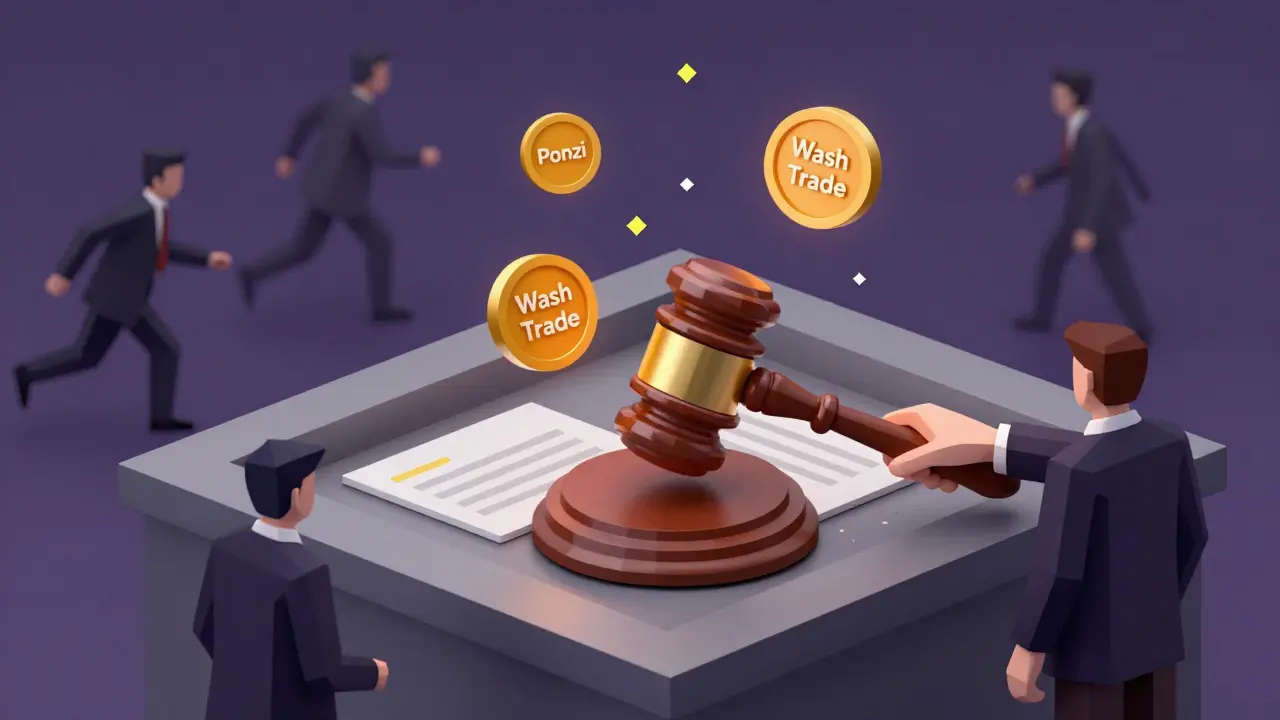
Wash trading used to be a gray area. In 2025, it became a federal crime. The DOJ’s new focus? Automated bots that fake volume. In October 2024, 17 people were charged in Massachusetts for using bots to buy and sell the same coins back and forth to make them look popular. These weren’t random traders. They were organized teams running match trades on meme coins like Dogecoin and Shiba Inu.
The goal? Trick retail investors into buying overhyped coins, then dump them. The DOJ called it “systematic market manipulation.” And they’re not just going after the traders. Executives who knew about the bots but did nothing are now facing personal liability. One former CTO was sentenced to 18 months in prison in March 2025.
Why This Is Different From Past Crackdowns
This isn’t the 2018 crypto winter. Back then, regulators were still figuring things out. Now, they’ve built specialized units. The DOJ has crypto prosecutors. The SEC has teams trained to trace blockchain transactions. FINRA has new compliance checklists for brokers.
They’re not guessing anymore. They’re using on-chain analytics, subpoenaing server logs, and working with international agencies. The OKX case? It started with a tip from a former employee. The Bitchain case? It was uncovered by analyzing wallet patterns over 14 months.
And the penalties? They’re designed to hurt. $500 million isn’t just a fine. It’s a message: if you’re not compliant, you won’t survive.
What You Should Do as a Crypto User
If you’re holding crypto on an exchange, ask yourself:
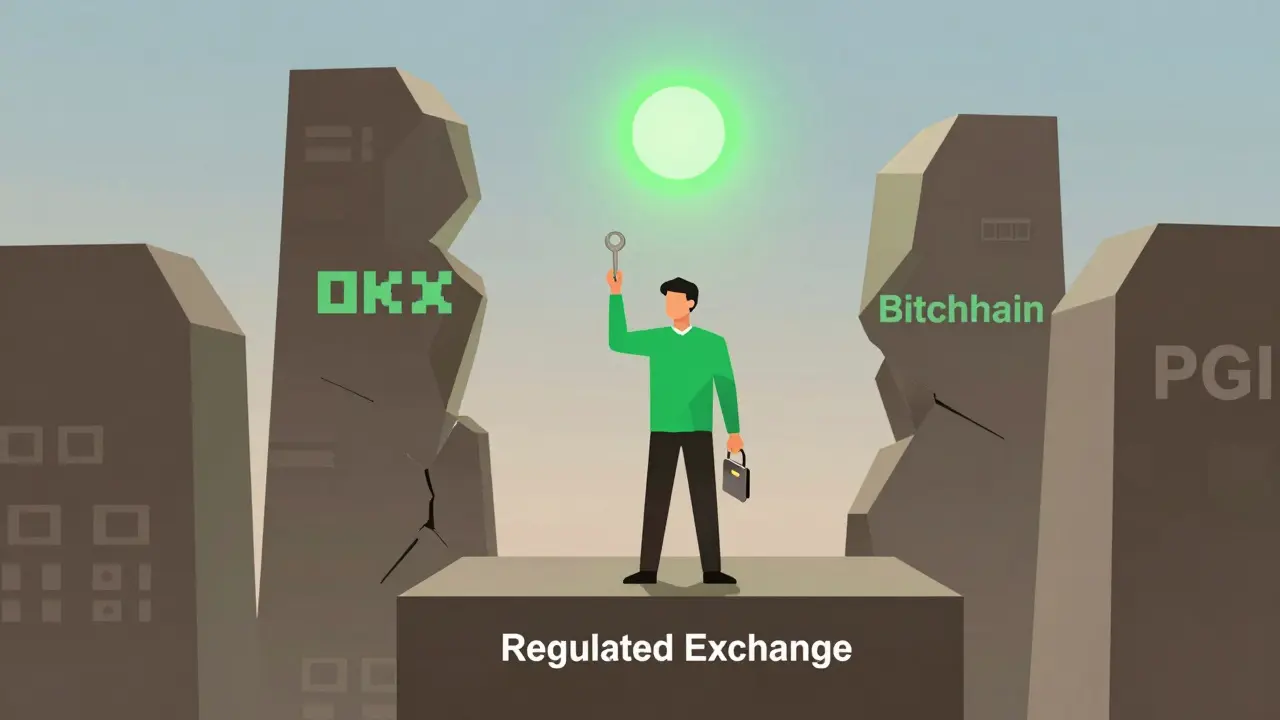
- Is this exchange registered with the SEC or FinCEN? (If it says “not available in the U.S.” but still lets you sign up, that’s a red flag.)
- Do they show KYC/AML policies on their website? (If not, walk away.)
- Have they ever been fined? (Search “[exchange name] + fine” - you’ll find it.)
- Do they let you withdraw to your own wallet? (If they block withdrawals or delay them, that’s a sign they control your funds.)
Don’t assume “big exchange = safe.” OKX was one of the top 5 exchanges by volume before the fine. Now, it’s a cautionary tale.
What’s Next for Crypto Regulation
Regulators aren’t slowing down. The SEC’s Project Crypto is expanding. The DOJ is training more prosecutors. The Eleventh Circuit’s recent ruling against the SEC’s audit trail rule shows legal challenges are coming - but they’re not stopping enforcement.
What’s clear is this: compliance isn’t optional. Exchanges that treat regulation as a hurdle are being wiped out. Those that build it into their DNA - real KYC, real monitoring, real transparency - are the ones that will last.
As a user, your safest move isn’t chasing the next 100x coin. It’s choosing an exchange that’s been audited, registered, and fined - because if they’ve paid the price, they’ve learned the rules.
Why did OKX get fined $500 million?
OKX was fined $504 million because it helped U.S. users bypass its own ban, allowed over $5 billion in suspicious transactions, failed to register as a money service business, and didn’t monitor transactions or screen for sanctions. The DOJ proved staff coached customers to fake IDs, making the violation intentional and criminal.
Are crypto exchanges still allowed to operate in the U.S.?
Yes, but only if they’re registered with FinCEN as a money service business, follow strict KYC/AML rules, and don’t offer unregistered securities. Exchanges like Coinbase and Kraken operate legally by complying. Others that ignore rules get shut down or fined out of existence.
Can I get in trouble for using a fined exchange?
As a regular user, you won’t be charged criminally just for using an exchange that got fined. But your funds could be frozen during investigations, and you may lose access if the exchange shuts down. It’s safer to use regulated platforms that don’t have a history of violations.
What’s the difference between SEC and DOJ actions?
The SEC goes after civil violations - like selling unregistered securities or committing fraud. The DOJ handles criminal cases - like money laundering, lying to regulators, or market manipulation. OKX faced both: the DOJ prosecuted them criminally, while the SEC could still sue them for investor harm.
How do I check if an exchange is compliant?
Look for a public AML/KYC policy, check if they’re registered with FinCEN (search their name on FinCEN’s website), and see if they’ve been fined in the past. Avoid exchanges that don’t clearly state their regulatory status or that let you skip identity verification.
Is crypto still safe to invest in?
Crypto itself isn’t illegal. But investing in unregulated platforms is risky. The safest approach is to use licensed exchanges, store your assets in your own wallet, and avoid anything promising guaranteed returns. If it sounds too good to be true - especially if it involves a multi-level marketing structure - it probably is.
PRECIOUS EGWABOR
December 11, 2025 AT 02:45Let’s be real - if you’re still using an exchange that doesn’t show its FinCEN registration, you’re not investing, you’re gambling with your rent money. OKX didn’t get fined because they were ‘bad’ - they got fined because they thought they could outsmart a federal agency with fake IDs and outdated software. This isn’t crypto’s fault. It’s human arrogance wrapped in blockchain buzzwords.
And no, ‘decentralized’ doesn’t mean ‘immune to subpoenas.’
Kathleen Sudborough
December 13, 2025 AT 01:25I know people are scared, but this is actually good news. The chaos is cleaning house. The exchanges that survived this wave? They’re the ones that finally started treating users like humans, not ATM machines.
It’s painful, sure - but sometimes you have to burn the whole building down to rebuild something that won’t collapse the next time the wind blows.
Stay calm. Do your homework. Withdraw to your own wallet. You’ve got this.
Heath OBrien
December 13, 2025 AT 04:58These exchanges are crooks and the regulators are just playing cops and robbers with monopoly money. Fines? Please. They just tax the fraud so it feels legal. We all know who really wins here.
lol
Taylor Farano
December 13, 2025 AT 17:39Oh wow, OKX got fined $500M? Shocking. Next you’ll tell me the moon is made of cheese and my dog understands quantum physics.
Meanwhile, I’m still holding my $20k in Bitchain because ‘they said it was decentralized’ and I believed them. My bad.
tl;dr - I’m dumb and I paid for it. Congrats, regulators. You win. Again.
Toni Marucco
December 14, 2025 AT 04:23What we are witnessing is not merely regulatory enforcement - it is the inevitable convergence of emergent decentralized financial architectures with the institutional scaffolding of modern liberal democracies.
The failure of entities like OKX and Bitchain Exchanges was not technological, nor even moral - it was epistemological. They operated under the delusion that opacity could coexist with scale, that anonymity could be monetized without accountability.
Regulators, for all their bureaucratic inertia, are not the antagonists here. They are the emergent counterweights to a system that forgot its own foundations. The market will not self-correct. Only the imposition of transparent, enforceable norms can prevent the collapse of trust - the true foundation of all finance.
So yes - register. KYC. Disclose. Comply. Not because you’re afraid. Because you are responsible.
Kathryn Flanagan
December 14, 2025 AT 13:35Okay, so if you’re new to this and you’re reading this and you’re like ‘wait, what do I even do?’ - here’s the simple version.
Step one: Go to the exchange’s website. Look for ‘Compliance’ or ‘Regulatory’ or ‘Legal’ in the footer. If you can’t find it in under 10 seconds, leave.
Step two: Google ‘[exchange name] + fine’ or ‘[exchange name] + SEC’ - if anything comes up that isn’t a press release from 2017, run.
Step three: If they don’t let you withdraw to your own wallet, they don’t own your coins - they own YOU. And that’s not crypto. That’s a pyramid scheme with a website.
It’s not complicated. You don’t need a degree. You just need to stop trusting anyone who says ‘trust us, we’re decentralized.’
I’ve seen people lose everything because they thought ‘big name’ meant ‘safe.’ It doesn’t. Not anymore.
Be smart. Be slow. Be safe.
amar zeid
December 16, 2025 AT 12:52Interesting how the same people who scream ‘freedom from banks’ now demand regulation to protect their investments. There’s irony here, but also wisdom.
Regulation doesn’t kill innovation - it filters out the fraudsters who poison the well for everyone else.
Just like we don’t let anyone open a bank without a license, we shouldn’t let anyone run a ‘crypto exchange’ without proving they’re not running a Ponzi.
My advice? Use only platforms that publish their audit reports publicly. If they’re hiding it, they’re hiding something.
Alex Warren
December 16, 2025 AT 21:29Wash trading is now a federal crime. That’s a milestone. The DOJ finally stopped treating crypto like a Wild West sideshow and started treating it like finance.
And yes - the CTO who got 18 months? He knew. He enabled it. He signed off on the bot scripts. That’s not a mistake. That’s criminal negligence.
Stop pretending this is all about ‘freedom.’ It’s about fraud. And fraud has consequences now.
Rakesh Bhamu
December 17, 2025 AT 02:00As someone who’s been in crypto since 2017, I’ve seen this movie before. The panic, the fear, the ‘crypto is dead’ headlines.
This time? It’s different. The regulators aren’t just throwing rocks - they’re building roads.
Exchanges that play by the rules? They’re thriving. Coinbase, Kraken, Bitstamp - they didn’t get rich by cheating. They got rich by being boring.
And guess what? Boring is the new black.
Don’t chase the hype. Chase the license. Chase the transparency. Chase the wallet you control.
That’s how you win.
Hari Sarasan
December 17, 2025 AT 19:26It is imperative to recognize that the regulatory overreach exhibited by the SEC and DOJ constitutes a systemic assault upon the ontological autonomy of decentralized finance. The imposition of KYC/AML protocols upon permissionless networks is not merely a legal infraction - it is an epistemic violation of the foundational tenets of cryptographic sovereignty.
One cannot reconcile the principles of pseudonymity with the bureaucratic apparatus of centralized oversight. The fines levied against OKX are not penalties - they are declarations of war against the very architecture of decentralization.
And yet - the market, in its infinite wisdom, shall persist. The nodes shall remain. The blockchain shall endure.
They may fine us. They may jail us. But they cannot unmine the blocks.
Lynne Kuper
December 19, 2025 AT 15:57Oh honey, you think this is bad? Wait till you see what happens when the IRS starts auditing crypto wallets like they’re W-2s.
Good luck explaining why you sent 37 ETH to a random address labeled ‘lunch’ in 2023.
PS - if your exchange says ‘no KYC’? That’s not freedom. That’s a red flag waving in a hurricane.
Lloyd Cooke
December 20, 2025 AT 08:57Perhaps the greatest tragedy of this era is not the fines, nor the closures, nor even the prison sentences - but the quiet realization that the dream of financial liberation was always tethered to the very institutions it sought to overthrow.
We wanted to escape the bank, but we built a new bank anyway - just with more memes and fewer suits.
And now, the suits are coming for the memes.
Is this the end of crypto?
No.
It’s the beginning of maturity.
Kurt Chambers
December 21, 2025 AT 03:46USA says ‘you can’t lie to us’ and then fines a company $500M? What a joke. Every other country lets you do this. We’re the only ones acting like we’re the world’s financial police.
Meanwhile, I’m moving my coins to a place that doesn’t care if I’m American. And I’m not sorry.
Y’all need to chill. Crypto’s not dead - you’re just mad you got caught.