
Compliance Challenges in DeFi: What You Need to Know in 2026
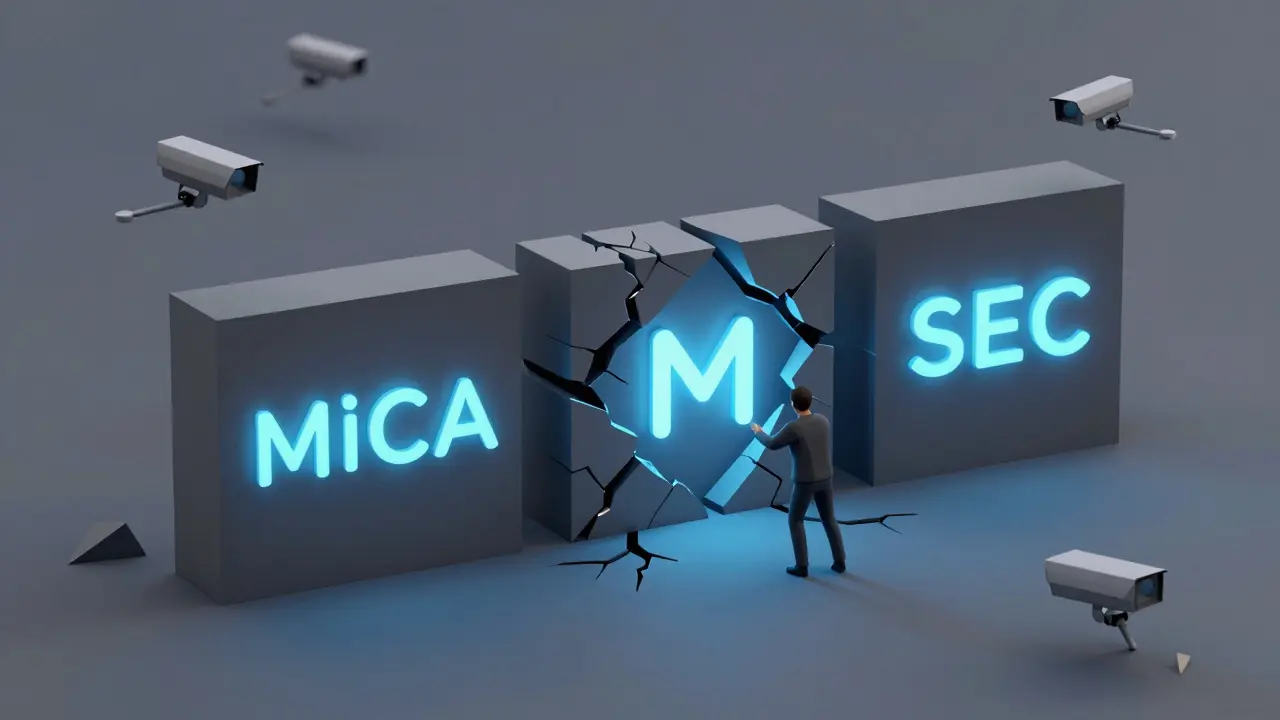
Decentralized Finance (DeFi) promised a financial system without banks, without intermediaries, and without gatekeepers. But by 2026, that dream is colliding with reality. Governments aren’t ignoring DeFi anymore-they’re building walls around it. And those walls are made of rules, audits, identity checks, and surveillance tools. If you’re using DeFi protocols like Uniswap, Aave, or Curve, you’re already inside a regulatory storm. The question isn’t whether DeFi will comply-it’s how it will survive the process.
Why DeFi Can’t Just Ignore Regulators Anymore
DeFi’s original design was beautiful in its simplicity: smart contracts run on blockchains, users interact through wallet addresses, and no single company owns the system. That’s also its biggest problem. Traditional finance has banks, auditors, and compliance officers. DeFi has code. And code doesn’t answer to regulators. But regulators don’t care about philosophy. They care about money laundering, tax evasion, and fraud. In 2025, the European Union’s Markets in Crypto-Assets Regulation (MiCA) became fully enforceable. The U.S. SEC started treating DeFi protocols as unregistered financial institutions. The Financial Action Task Force (FATF) updated its Travel Rule to require real-time data sharing on transactions over $1,000. Suddenly, every DeFi platform had to ask: Who is behind this wallet? The answer? Nobody. That’s the problem.The Core Conflict: Privacy vs. Accountability
DeFi users value privacy. Wallet addresses like 0x742d...a1c9 don’t reveal names, addresses, or IDs. That’s why criminals use it. And that’s why regulators are cracking down. The FATF Travel Rule now forces Virtual Asset Service Providers (VASPs)-which includes many DeFi front-ends and aggregators-to collect and transmit sender and receiver details. But how do you enforce that when the protocol itself has no central server? Some protocols tried to bypass this by routing transactions through centralized bridges or wrapped tokens. Others built KYC layers into their apps. Both approaches break the original promise of DeFi: permissionless access. In 2025, Chainalysis reported that cross-chain laundering increased by 42% year-over-year. Criminals moved funds from Ethereum to Solana, then to Polygon, then to Monero, then back out-each hop obscuring the trail. Regulators now need tools that track money across 15+ blockchains, not just one. And those tools cost millions to build.What MiCA and DORA Actually Mean for DeFi Projects
The EU’s MiCA regulation doesn’t just target exchanges. It applies to any platform that offers crypto services-including lending, staking, and automated trading bots. If your DeFi app lets users deposit ETH and earn interest, you’re now a regulated entity. You need:- A legal entity registered in an EU member state
- Proof of operational resilience (DORA)
- Real-time transaction monitoring
- Incident reporting within 2 hours of detecting a breach
- Audit trails for every smart contract change
Custody Rules Are Breaking DeFi’s Foundation
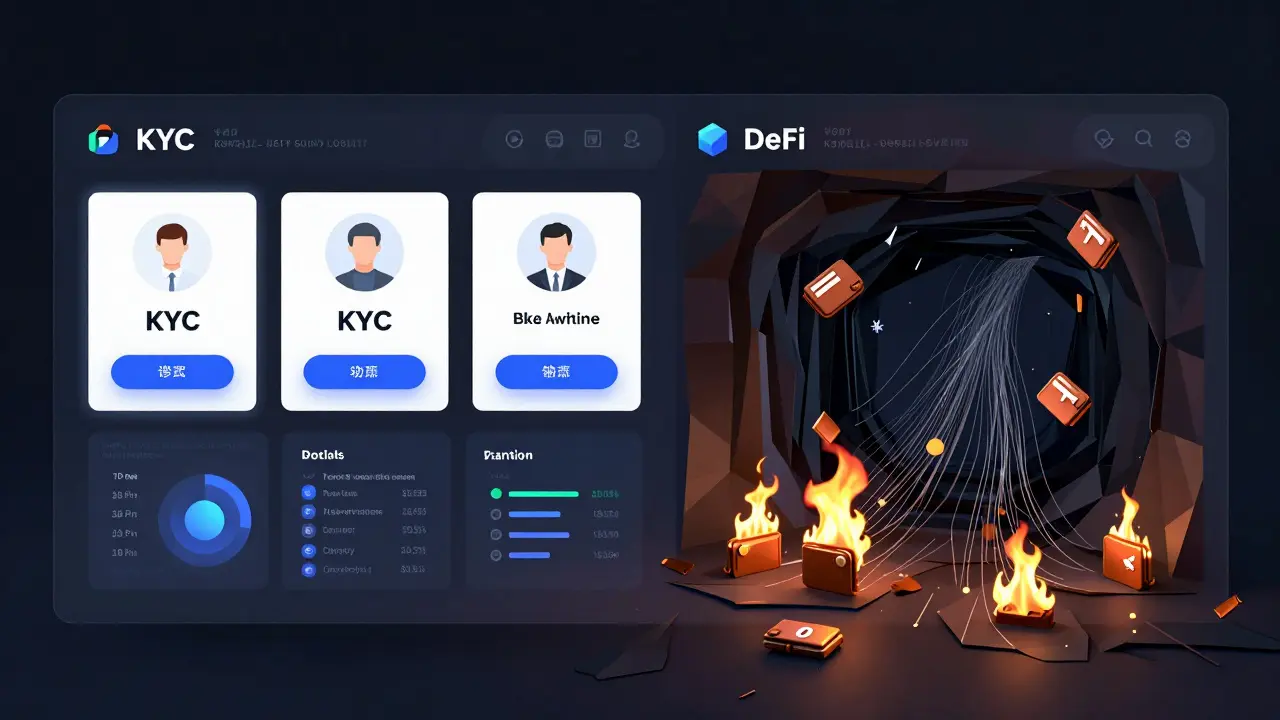
In the U.S., the SEC’s Rule 206(4)-2-the Custody Rule-requires investment advisors to hold client assets with qualified custodians. That means: no self-custody. No MetaMask. No hardware wallets. No smart contract locks. But DeFi’s whole point is self-custody. You hold your keys. You control your funds. That’s why institutional investors stayed away. Then came the Galois Capital case. In early 2025, the SEC fined them $225,000 for holding crypto assets in non-approved wallets. It was the first time a crypto fund was punished under traditional custody rules. Now, institutional DeFi users are forced to use third-party custodians like Coinbase Custody or Fidelity Digital Assets. Those services aren’t built for DeFi. They can’t interact with smart contracts. They can’t stake ETH. They can’t provide liquidity pools. So institutions are stuck: either give up DeFi returns, or break SEC rules.AI Is Making Compliance Harder-And Easier
On one side, AI is helping criminals. Deepfake voice scams trick users into approving malicious transactions. AI-generated phishing sites mimic Uniswap’s interface perfectly. In 2025, over 30% of DeFi-related fraud involved AI-generated content. On the other side, AI is helping compliance. Regulators now use AI-powered tools like Elliptic, Chainalysis, and TRM Labs to trace money across chains. These tools flag suspicious patterns: a wallet receiving $500K from a mixer, then sending $480K to a newly created wallet on Arbitrum. The system learns from thousands of past crimes and predicts the next move. But here’s the catch: these tools require data. And data requires identity. So to comply, DeFi platforms must collect more user info than ever before. You can’t just connect your wallet anymore. You might need to upload ID, proof of address, and even a selfie. Welcome to Web3, with a driver’s license.
The Human Cost: Confusion, Fear, and Exodus
Users aren’t confused. They’re angry. Reddit threads are full of posts like: “I lost $12K because I didn’t know I had to report my DeFi earnings.” “Why do I need KYC to swap ETH for DAI?” “I used DeFi to escape banks. Now I’m back in the system.” In New Zealand, Australia, and Canada, regulators have taken a softer approach. But users from the U.S., EU, and UK are being blocked from DeFi platforms. Some protocols now geo-block entire countries. Others require users to sign legal waivers before accessing their apps. The result? Retail users are leaving. According to a December 2025 report from DappRadar, daily active DeFi users dropped 18% in the EU after MiCA enforcement. The decline was steepest among users under 35-the group that once drove DeFi adoption.What’s Next? The Two Paths for DeFi
There are only two ways forward:- Adapt and comply-become a regulated financial service. Accept KYC, report transactions, hire lawyers, and pay audits. This path means losing decentralization but gaining legitimacy. Aave and Curve are already on this path.
- Go underground-operate without compliance. Accept the risk. Stay anonymous. Avoid regulators. This path means constant vulnerability to hacks, freezes, and shutdowns. Many small projects are choosing this.
Final Reality Check
DeFi didn’t die. It changed. The wild west of 2021 is gone. In 2026, DeFi is becoming more like Wall Street-with fewer people, higher costs, and more paperwork. If you’re still using DeFi without KYC, you’re not a pioneer. You’re a target. If you’re building a DeFi protocol, you’re not a disruptor. You’re a regulated entity. The blockchain didn’t change. The world did.Is DeFi illegal?
No, DeFi itself isn’t illegal. But many DeFi activities-like unlicensed lending, unreported income, or mixing funds-violate existing financial laws in most countries. Regulators aren’t banning DeFi. They’re enforcing rules that have existed for decades on new technology.
Do I need to do KYC to use DeFi?
It depends. If you’re using a DeFi platform with a centralized front-end-like a wallet app or aggregator-you’ll likely need KYC. If you’re interacting directly with a smart contract using MetaMask, technically no. But many platforms now block non-KYC users. So in practice, yes, you’ll probably need it to access most services.
What happens if I don’t report my DeFi earnings?
Tax authorities are tracking crypto transactions. In the U.S., the IRS requires reporting of all crypto income, including DeFi rewards, staking, and yield farming. Failure to report can lead to audits, fines, or criminal charges. In the EU, MiCA now requires platforms to report user activity to tax authorities. Ignoring this is no longer an option.
Can DeFi survive without KYC?
Not at scale. The largest DeFi protocols now rely on KYC to access institutional capital and avoid regulatory shutdowns. While some niche, non-KYC protocols still exist, they’re increasingly isolated, risky, and under constant surveillance. The future of DeFi belongs to those who can blend compliance with innovation-not those who reject regulation entirely.
Why are DeFi compliance costs so high?
Because DeFi wasn’t built for regulation. Unlike banks, which have decades of compliance infrastructure, DeFi projects must build custom systems from scratch: blockchain analytics, cross-chain monitoring, smart contract audits, legal teams, and real-time reporting tools. Most don’t have the budget. That’s why only the biggest players are surviving.
Ross McLeod
March 20, 2026 AT 03:39Let's be real-DeFi never had a chance. The whole premise was built on a fantasy that code could outmaneuver centuries of financial regulation. You think a smart contract is gonna outwit the IRS? The FATF? MiCA? No. It’s not about innovation; it’s about power. The system doesn’t care if you’re ‘decentralized.’ It cares if you’re taxable. And guess what? Every wallet that moves value is now a data point. The people who still think they’re ‘sticking it to the banks’ are just handing over their transaction history to Chainalysis like it’s a loyalty card.
There’s no moral high ground here. You want privacy? Use Monero. You want DeFi yields? You’re part of the system now. Stop pretending you’re a rebel when you’re just another node in a surveillance network.
rajan gupta
March 21, 2026 AT 00:43Brooo 😭💔 DeFi was supposed to be our digital utopia… and now we got KYC, ID scans, and government bots tracking our ETH swaps like we’re criminals? I just wanted to earn 8% on DAI… now I gotta upload my passport??
Where’s my freedom?? 🌌💸 I miss 2021 when we just sent crypto and said ‘lol see ya’ 😎
Billy Karna
March 22, 2026 AT 05:35There’s a fundamental misunderstanding here. DeFi isn’t dying-it’s maturing. The early adopters saw it as a tech experiment. Regulators see it as a financial instrument. That’s not a bug; it’s a feature.
Think about it: if you’re running a lending protocol that handles billions, you’re functionally a bank. You don’t get to opt out of anti-money laundering laws just because your code runs on Ethereum. The real innovation isn’t avoiding regulation-it’s building compliance into the protocol itself. Think zero-knowledge proofs for identity, on-chain attestation, and verifiable audit trails. That’s the next frontier. The old guard is panicking. The builders are coding.
And yes, small teams can’t handle this. But that’s why we need open-source compliance tooling. Not more bureaucracy. More collaboration. The future isn’t centralized DeFi. It’s decentralized compliance.
Cheri Farnsworth
March 23, 2026 AT 07:29Regulation is not the enemy. Fear is.
We have spent decades building financial systems that protect people from fraud, theft, and exploitation. To reject that now because it feels ‘centralized’ is not liberation-it’s self-sabotage.
DeFi users are not revolutionaries. They are customers. And customers deserve protection. The fact that we have to explain this to people who think MetaMask is a sanctuary is heartbreaking.
Compliance isn’t surrender. It’s responsibility.
Gene Inoue
March 24, 2026 AT 11:07You people are so naive. You think regulators are ‘cracking down’? Nah. They’re just finally catching up to the fact that crypto bros have been running a global Ponzi scheme under the guise of ‘innovation.’
DeFi didn’t fail. It was always a tax evasion tool for rich guys and Russian oligarchs. Now they’re forcing it to grow up. Good. Let the scammers go underground. The rest of us want to use this shit without getting raided by the feds.
Self-custody? More like self-delusion. You don’t own your coins if you can’t prove you didn’t steal them.
Ricky Fairlamb
March 25, 2026 AT 12:45It’s not about compliance. It’s about control. The entire architecture of DeFi was designed to bypass the state. Now that the state has the tools to trace every transaction across 15 chains, it’s weaponizing its data advantage. The FATF Travel Rule? It’s not about money laundering-it’s about establishing jurisdictional supremacy.
And don’t pretend the ‘AI-powered surveillance tools’ are neutral. They’re built by private contractors with ties to intelligence agencies. Chainalysis doesn’t answer to you. It answers to the Treasury Department.
This isn’t regulation. It’s digital colonization. The blockchain was supposed to be sovereign territory. Now it’s just another province under the U.S. Treasury’s flag.
Arlene Miles
March 26, 2026 AT 03:06Look, I get it. You built this because you hated banks. You wanted autonomy. You wanted to be your own bank.
But here’s the truth: autonomy without accountability is chaos. And chaos doesn’t last. It attracts predators. It invites crackdowns.
What if we reframed this? What if instead of fighting KYC, we built better KYC? Privacy-preserving, on-chain, zero-knowledge identity systems? What if we made compliance *easier* than evasion? What if we turned regulators into allies instead of enemies?
This isn’t the end of DeFi. It’s the beginning of its second life. The first life was wild and reckless. The second life? It can be sustainable. But only if we choose collaboration over rebellion.
Jessica Beadle
March 26, 2026 AT 11:02The notion that DeFi can remain ‘permissionless’ while integrating with regulated financial infrastructure is a category error. You cannot have a system that is simultaneously trustless and identity-bound without introducing a trusted third party. The entire premise collapses under its own contradiction.
The regulatory burden isn’t ‘high’-it’s inevitable. The cost of non-compliance is existential. Protocols that refuse to integrate with VASPs are not principled-they’re economically irrational. And the users who cling to MetaMask as a moral shield are not freedom fighters-they’re foot soldiers in a doomed insurgency.
There is no third path. There is only adaptation or obsolescence.
Tony Weaver
March 27, 2026 AT 14:05Let’s not romanticize this. DeFi was never meant to be a financial system. It was a social experiment in libertarian delusion. And now the experiment has failed.
The fact that you’re still arguing about ‘permissionless access’ while your local exchange blocks you for not uploading a selfie proves the point: the users don’t want freedom. They want convenience without consequences.
And the protocols? They’re not ‘complying.’ They’re surrendering. Aave with a legal team? That’s not innovation. That’s a bank in a hoodie.
Patty Atima
March 29, 2026 AT 00:06Yeah I just swapped some ETH for DAI and got blocked. Frustrating. But I get it. Probably just easier for them to block everyone than to figure out who’s who.
Guess I’ll stick to Coinbase for now. Still makes money, just less ‘decentralized’ 😅
Lucy de Gruchy
March 30, 2026 AT 01:34Of course they’re enforcing rules. But let’s not pretend this isn’t a power grab. The EU didn’t pass MiCA to protect consumers. They did it to centralize control over crypto under their jurisdiction. The U.S. SEC doesn’t care about fraud-they care about maintaining the dollar’s dominance.
And now every DeFi protocol has to choose: become a pawn of the state, or vanish into the dark web. There’s no ‘middle ground.’ It’s a trap.
Wake up. This isn’t about compliance. It’s about control.
Lauren J. Walter
March 30, 2026 AT 17:39So… we spent 5 years building this decentralized utopia… and now we have to fill out a form? How poetic.
Next they’ll ask for my zodiac sign and preferred coffee order.