
Central Bank of Brazil Crypto Policy: Rules, Restrictions, and What It Means for Users

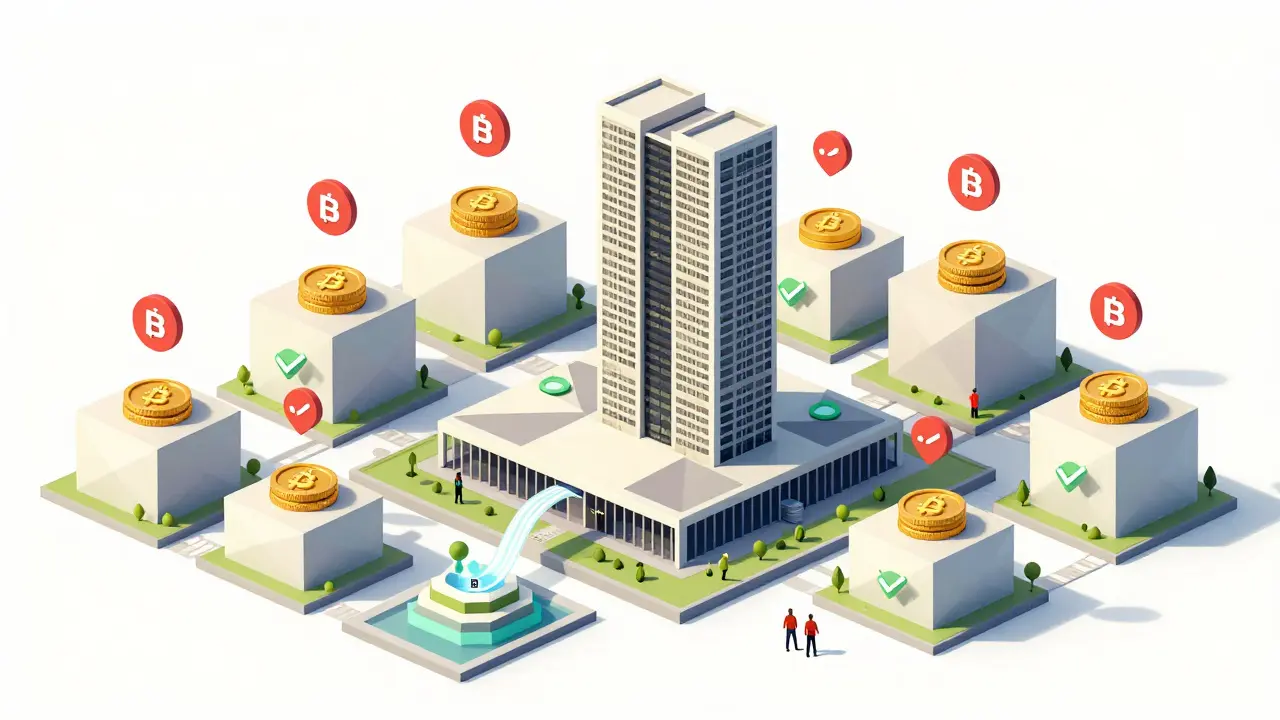
When you buy Bitcoin or trade Ethereum in Brazil, you're not just using a digital wallet-you're navigating one of the strictest and most detailed crypto regulatory systems in the world. Since June 2023, the Central Bank of Brazil (the country's primary financial regulator, responsible for overseeing all virtual asset service providers) has been in full control of how cryptocurrencies operate in the country. This isn't a loose guideline. It's a full legal framework with real consequences. And if you're using crypto in Brazil, you need to know exactly what's allowed-and what's blocked.
How Brazil's Crypto Rules Are Enforced
The foundation of Brazil's crypto policy is Federal Law No. 14,478/2022 (also called the Brazilian Virtual Assets Law or BVAL). This law didn't just make crypto legal-it made it a regulated financial activity. The Central Bank of Brazil (the main authority for authorizing and supervising crypto service providers) now requires every exchange, wallet provider, or trading platform operating in Brazil to register with them. No exceptions. No gray areas.It's not enough to just sign up. You must prove you have:
- Full Anti-Money Laundering (AML) (systems to detect illegal fund flows) protocols
- Strict Know Your Customer (KYC) (identity verification for every user) checks
- Real-time transaction monitoring tools
- A dedicated compliance team
There’s no official "crypto license." Instead, companies get registered and must follow strict operational rules. Failure means fines, suspension, or being shut down entirely. By 2025, over 120 crypto platforms had registered with the Central Bank of Brazil, but more than 30 were suspended for non-compliance.
The $10,000 International Transfer Cap
One of the most disruptive rules came in early 2025: a $10,000 monthly limit on international transfers involving crypto. This wasn’t just a suggestion-it was a hard cap enforced by the Central Bank of Brazil to prevent capital flight and stabilize the Brazilian real (BRL).What does this mean in practice?
- You can’t send $15,000 worth of Bitcoin to a U.S. exchange to trade or store.
- Exchanges must block transactions that exceed the limit, even if they’re split across multiple wallets.
- Platforms now have to integrate forex monitoring tools that track cross-border crypto flows in real time.
This rule hit hard. Many Brazilian users relied on international exchanges like Binance or Coinbase for better liquidity and lower fees. Now, those platforms either limit Brazilian users or force them to use local fiat gateways. Some exchanges responded by partnering with local banks to create BRL-only trading pairs. Others built internal peer-to-peer networks to keep transactions within Brazil.
Stablecoins Are Restricted-Even Though They Dominate
Here’s the contradiction: Stablecoins (digital assets pegged to fiat currencies like USD or BRL) make up about 90% of all crypto transactions in Brazil, according to Central Bank of Brazil data. People use them to avoid currency swings, send money abroad, or trade other cryptos without cashing out.Yet, the Central Bank of Brazil has imposed strict limits on their use. In 2025, it banned stablecoin issuers from operating without prior authorization. Only those registered as financial institutions can issue them. Even then, they must:
- Hold 100% reserves in Brazilian central bank-recognized assets
- Submit daily audit reports
- Restrict redemption to BRL-only withdrawals
That’s why you won’t find USDT or USDC easily used for everyday purchases anymore. Most exchanges now treat them as trading pairs only-not as payment tools. Users who try to convert stablecoins directly into BRL face extra scrutiny. The Central Bank of Brazil wants to prevent stablecoins from becoming a parallel currency system.
The DeCripto Reporting System
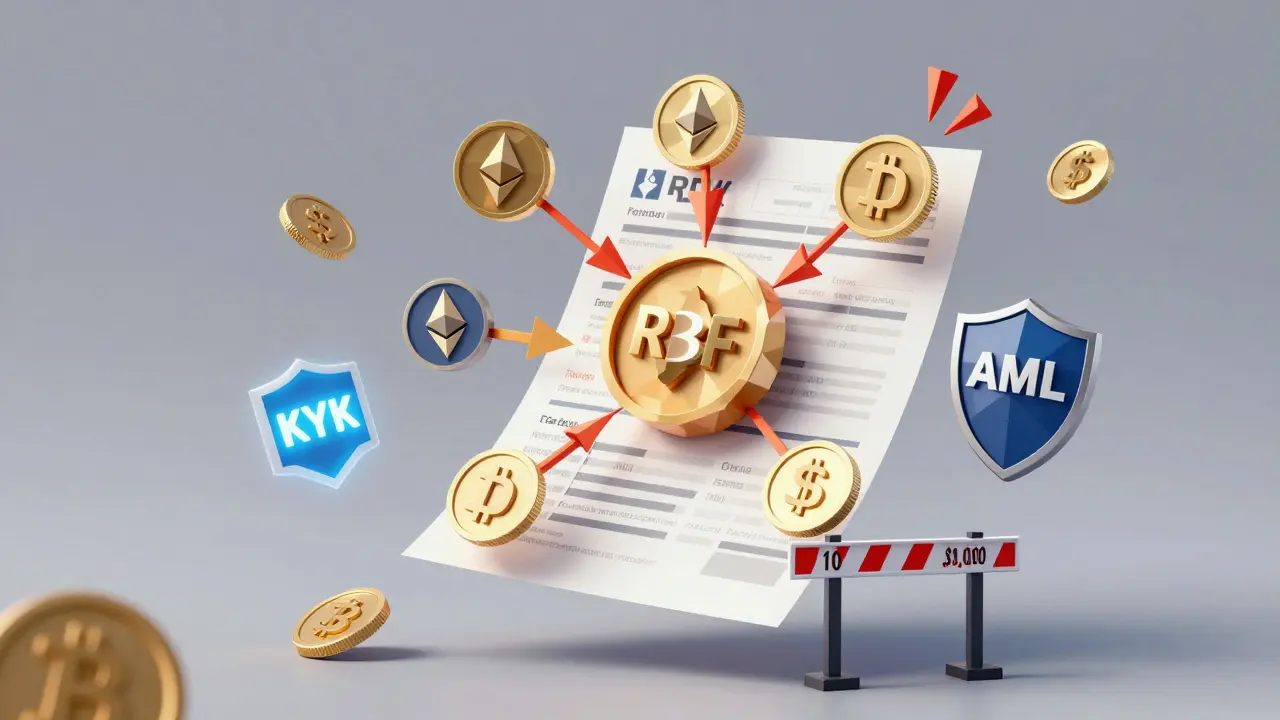
In March 2025, the Central Bank of Brazil launched DeCripto (a mandatory crypto transaction reporting system). Every Brazilian crypto user must now report their entire transaction history annually-buying, selling, swapping, staking, or even transferring between wallets.Exchanges are required to integrate DeCripto modules directly into their platforms. This means:
- Every trade generates a report automatically
- Wallet addresses are linked to tax IDs
- Missing data triggers an alert to the Brazilian Revenue Service (RFB, the tax authority)
If you made $5,000 in crypto profits last year and didn’t report it? You’ll get a letter from the RFB. Penalties can reach 75% of the unreported amount. This isn’t a warning-it’s a full audit system.
How Other Agencies Fit In
The Central Bank of Brazil doesn’t work alone. Three other agencies play key roles:- Securities and Exchange Commission of Brazil (CVM) (Regulates crypto assets that act like securities, like tokenized stocks or investment funds)
- Financial Activities Control Council (COAF) (Monitors suspicious transactions and flags potential money laundering)
- Brazilian Revenue Service (RFB) (Collects taxes on crypto profits and enforces DeCripto compliance)
If you trade crypto and make a profit, you pay capital gains tax. If you receive crypto as payment for work, it’s treated as income. The CVM is also preparing rules for tokenized assets-like shares of real estate or company equity on blockchain-which could open up new investment avenues, but only under heavy oversight.
The DREX Platform: Not a CBDC, But Something Bigger
While most countries are racing to launch their own Central Bank Digital Currency (CBDC) (a digital version of national currency issued by the central bank), Brazil is doing something different. The Central Bank of Brazil is developing DREX (a distributed ledger system for tokenized bank deposits and securities).DREX isn’t a digital real. It’s a secure infrastructure for banks to issue tokenized assets-like digital bonds, loans, or savings accounts-on a blockchain. It’s already being tested by Banco do Brasil, Itaú, and Bradesco. The goal? To make financial products faster, cheaper, and more transparent.
What does this mean for crypto users? Not much directly. But DREX shows the Central Bank of Brazil isn’t trying to crush innovation. It’s trying to absorb it-into the official financial system.
What’s Next? The Road to 2026
The Central Bank of Brazil has made it clear: regulation isn’t done. In 2025-2026, they’re focusing on:- Finalizing rules for stablecoin issuers
- Launching public consultations on asset tokenization
- Expanding the DREX pilot to include government bonds
- Introducing stricter penalties for non-compliant platforms
Experts say Brazil’s approach is unique: not as strict as China, not as loose as El Salvador. It’s a middle path-strict rules, but with room for innovation. The challenge? Compliance costs. Smaller exchanges are struggling to afford the AML software and legal teams needed. Some have shut down. Others are merging or moving operations overseas.
For users? The system is now safer. Fraud and scams have dropped by 40% since 2023. But the trade-off is complexity. You can’t just buy crypto and forget it anymore. You need to track every transaction. You need to report everything. And you need to understand that your ability to move money across borders is now capped.
What You Should Do Right Now
If you’re using crypto in Brazil, here’s what to do:- Use only registered platforms-check the Central Bank of Brazil’s official list.
- Enable all KYC and AML steps-even if they feel invasive.
- Track every crypto transaction: buys, sells, swaps, transfers.
- Use DeCripto-compliant platforms that auto-report to the RFB.
- Don’t try to bypass the $10,000 cap. It’s monitored and tracked.
- Keep records of all gains and losses for tax season.
The Central Bank of Brazil isn’t trying to stop crypto. It’s trying to own it. And if you want to keep using it, you have to play by their rules.
Is crypto legal in Brazil?
Yes, crypto is legal in Brazil, but only if you use platforms registered with the Central Bank of Brazil. The Brazilian Virtual Assets Law (BVAL) made it a regulated financial activity, not a free-for-all. Unregistered exchanges are illegal, and users who trade on them risk losing funds without legal recourse.
Can I send crypto from Brazil to another country?
You can, but only up to $10,000 per month. The Central Bank of Brazil enforces this cap on all international transfers involving crypto. Any attempt to split transactions or use multiple wallets to bypass it will trigger alerts and possible account freezes. This rule applies to both individuals and businesses.
Do I have to pay taxes on my crypto gains in Brazil?
Yes. The Brazilian Revenue Service (RFB) requires you to report all crypto profits as capital gains. If you sell Bitcoin for a profit, you owe tax. Exchanges now integrate with DeCripto to automatically report transactions, so hiding gains is nearly impossible. Failure to report can result in fines up to 75% of the unreported amount.
Why are stablecoins restricted if they’re so popular?
Stablecoins make up 90% of Brazil’s crypto volume, but the Central Bank of Brazil sees them as a risk to financial stability. They can act like a parallel currency, bypassing banking controls. To reduce this risk, only registered financial institutions can issue stablecoins, and they must hold 100% reserves in approved assets. Redemption is limited to BRL, and daily reporting is mandatory.
What happens if I use an unregistered crypto exchange in Brazil?
You risk losing your funds with no legal protection. Unregistered exchanges aren’t monitored by the Central Bank of Brazil, so they aren’t required to follow AML, KYC, or DeCripto rules. If the platform shuts down, gets hacked, or disappears, you have no recourse. The bank advises all users to only use registered platforms listed on its official website.
Tracy Peterson
February 28, 2026 AT 11:48They claim safety, but safety without autonomy is just control. I'd rather lose my coins to a scam than hand over my transaction history to a bureaucracy that doesn't understand what it's regulating.
George Suggs
March 2, 2026 AT 05:28Dianna Bethea
March 3, 2026 AT 10:14DeCripto feels invasive but if you’re making gains you should report them. Taxes aren’t evil. Avoiding them is. And the DREX platform? That’s the future. Tokenized bonds, real-time settlements. This isn’t about crushing crypto. It’s about folding it into the real economy. Smart move.
KingDesigners &Co
March 5, 2026 AT 06:42120 platforms registered? More like 120 people with Excel sheets and a dream.
They banned USDT? Cool. Now everyone’s using Monero over Tor.
DeCripto? More like DeSpied.
Meanwhile, the real crypto users are just moving to P2P. The system’s broken. They don’t control the money. They just control the paperwork.
Felicia Eriksson
March 6, 2026 AT 17:18aaron marp
March 7, 2026 AT 03:29Kenneth Genodiala
March 9, 2026 AT 01:51Michael Rozputniy
March 9, 2026 AT 04:10Danny Kim
March 10, 2026 AT 19:59Cathy Sunshine
March 11, 2026 AT 18:39Shannon Black
March 12, 2026 AT 02:27Brian Lemke
March 13, 2026 AT 10:17Cheryl Fenner Brown
March 13, 2026 AT 19:04