
Can You Move Bitcoin Out of China? Current Laws and Risks
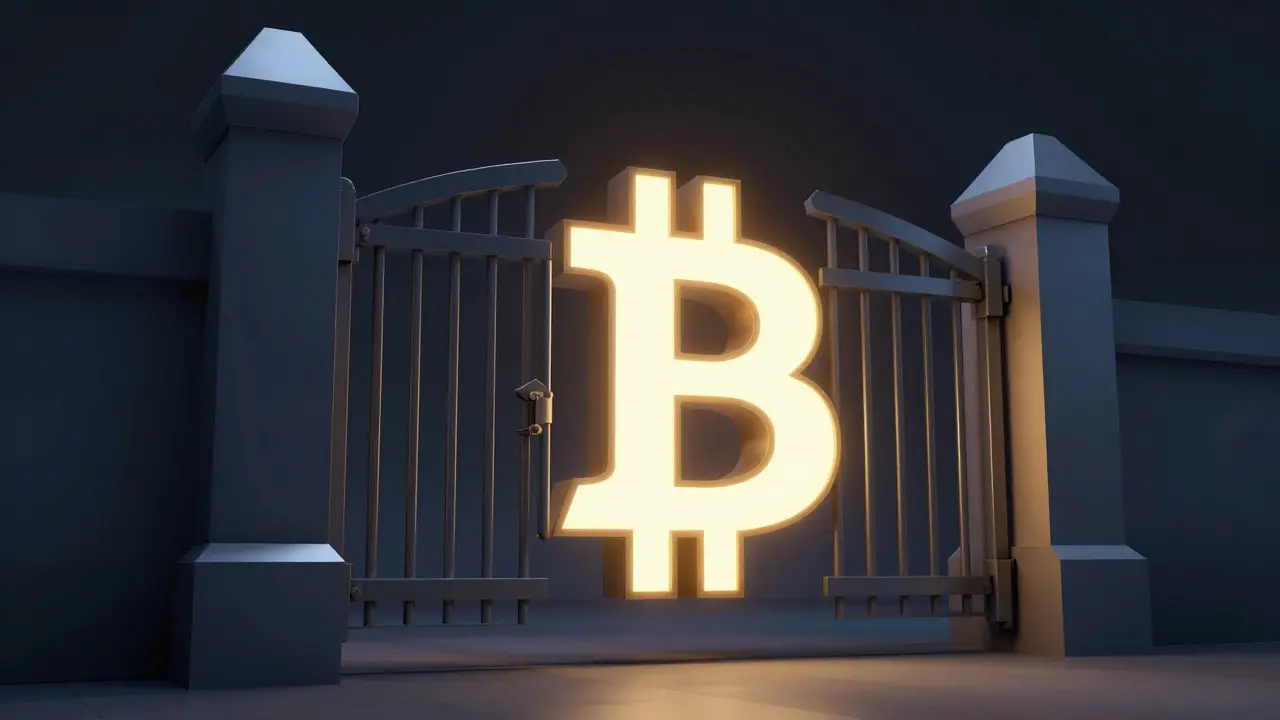
If you're looking for a way to move Bitcoin is a decentralized digital currency without a central authority that controls most of the cryptocurrency market or other digital assets out of China today, you need to know one thing immediately: the legal window has slammed shut. As of June 1, 2025, the regulatory environment didn't just get stricter-it became absolute. The People's Bank of China the central bank of the People's Republic of China responsible for monetary policy and financial stability (PBOC) shifted from banning exchanges to banning the very act of owning cryptocurrency.
Key Takeaways
- Total Ban: Since June 2025, owning, trading, or mining crypto in China is illegal.
- Zero Legal Paths: There are currently no legal ways to transfer crypto across borders from mainland China.
- High Risk: Attempts to move funds can lead to asset seizure and criminal charges.
- State Alternative: The government pushes the e-CNY as the only legal digital currency.
The Hard Reality of the 2025 Total Ban
For years, people in China played a game of cat-and-mouse with regulators. First, banks were told to stop helping crypto traders. Then, exchanges were kicked out. But the May 30, 2025 announcement changed everything. The PBOC didn't just target the businesses; they targeted the individuals. This means that cryptocurrency ownership itself is now classified as an illegal financial activity.
What does this mean for someone trying to move funds? It means that any one-to-one transfer, even using a private wallet, is technically a violation of the law. The government has tasked the Ministry of Public Security with aggressive enforcement. They aren't just looking for big exchanges; they are monitoring the movement of funds into and out of traditional bank accounts to spot the "fingerprints" of crypto trading.
How the Government Tracks Your Moves
You might think, "I'll just use a decentralized wallet and a P2P trade, and they'll never know." That's a dangerous assumption. China has built a massive surveillance net that blends online tracking with offline inspections. Financial institutions are now required to flag any account that shows patterns typical of money laundering the illegal process of making large amounts of money generated by a criminal activity appear to have come from a legitimate source or crypto-related settlements.
If you try to move a large sum of money to an overseas account to fund a crypto purchase or receive funds from a crypto sale, your bank is legally obligated to report it. Because the act of owning the asset is illegal, the standard "Know Your Customer" (KYC) process has flipped. Instead of checking if you're a real person, the banks are checking if you're a crypto user so they can block you.
The Shift to e-CNY and State Control
Why is the government so obsessed with stopping Bitcoin? It comes down to control. The state wants the e-CNY the digital version of the Chinese yuan, a Central Bank Digital Currency (CBDC) issued and managed by the PBOC to be the only digital asset in the ecosystem. Unlike Bitcoin, the e-CNY is completely programmable by the government.
They can put expiration dates on your money, limit where you spend it, or restrict it to certain geographic zones. By killing off private cryptocurrencies, they remove the competition and ensure that every single transaction in the country is visible to the central authorities. They view dollar-backed stablecoins as a direct threat to their monetary sovereignty, which is why the ban is so severe.
| Feature | Bitcoin (BTC) | Digital Yuan (e-CNY) |
|---|---|---|
| Legal Status | Illegal to own/trade | Official State Currency |
| Control | Decentralized | Centralized (PBOC) |
| Anonymity | Pseudonymous | Full State Visibility |
| Cross-Border Use | Banned/Monitored | Controlled by State |

The "Hong Kong Loophole" and Its Limits
Many people look toward Hong Kong a special administrative region of China with a separate legal and financial system as a sanctuary. It's true that Hong Kong has a much friendlier regulatory framework for crypto. However, for a resident of mainland China, this is a very thin bridge. Capital controls still apply.
Getting your fiat money into Hong Kong to trade for Bitcoin-or moving the proceeds of a Bitcoin sale back into the mainland-triggers the same red flags at the bank. Furthermore, there is talk of "geofencing" new renminbi-backed stablecoins, which would use code to ensure the money can't be used outside of specific approved zones. Even if you have a foot in Hong Kong, the mainland's laws still apply to you as a citizen.
The Risks of Circumvention
Some may be tempted by "grey market" services or VPNs to access Overseas Exchanges Trading platforms based outside of China that allow users to buy and sell digital assets. You need to understand that the risk isn't just a frozen account. Under current anti-money laundering statutes, attempting to move crypto abroad can be framed as a criminal offense.
The government has the power of asset forfeiture. If they find a link between your bank account and a crypto wallet, they don't just stop the transfer; they can seize the entire amount. In a system where the state owns the payment rails, there is no such thing as a "private' transaction once it touches a bank account.

Is There Any Hope for a Policy Shift?
There are whispers of change. In July 2025, some officials in Shanghai discussed how to better respond to digital assets. Some experts, like Wang Yongli, have argued that China should launch its own offshore stablecoin to compete with the US Dollar. The idea is that if China can't beat the efficiency of stablecoins, it will lose its grip on international payments.
While these discussions are happening, they are purely theoretical. No official decree has rolled back the 2025 ban. Until you see a formal policy change from the State Council or the PBOC, the rule remains: crypto ownership is a crime. Any "guide" promising a safe, legal way to move Bitcoin out of China right now is lying to you.
Is it legal to own Bitcoin in China in 2026?
No. As of June 1, 2025, the People's Bank of China has banned the individual ownership, trading, and mining of cryptocurrencies. Owning these assets is now classified as an illegal financial activity.
Can I use a VPN to trade on a foreign exchange?
While a VPN might hide your IP address from the exchange, it does not hide your financial trail. Using a Chinese bank account to fund or withdraw from a foreign exchange is highly likely to be detected and reported by your bank.
What happens if the government finds crypto in my account?
Under current laws, you face significant legal risks, including the seizure of assets (forfeiture) and potential criminal liability under anti-money laundering and illegal financial activity statutes.
Is e-CNY the same as Bitcoin?
No. Bitcoin is a decentralized asset with no central controller. e-CNY is a Central Bank Digital Currency (CBDC), meaning it is fully controlled by the Chinese government and is a digital version of the national currency.
Can I move my crypto to Hong Kong to make it legal?
Hong Kong has its own crypto laws, but mainland Chinese residents are still subject to mainland capital controls. Moving funds across the border to facilitate crypto trades is still a violation of mainland law.
Next Steps and Warnings
If you currently hold assets in China, your first priority should be legal counsel. Do not attempt to move large sums of money through unverified P2P channels, as these are often monitored by the Ministry of Public Security to catch users. For those outside China, avoid offering "transfer services" to residents in the mainland, as you may be inadvertently participating in illegal financial activity under Chinese law.
Eric Raines
April 22, 2026 AT 19:41Everyone knows this is just a move to force everyone onto the e-CNY so they can track every single cent you spend on a bag of chips
It's not even a secret if you've followed the PBOC for more than five minutes
Benjamin Forg
April 24, 2026 AT 14:03digital shackles’ is what this really is the state just wants a direct line into your brain and your wallet and people actually think a vpn saves them lol
Yvette P
April 25, 2026 AT 01:55Oh honey, the sheer audacity of thinking a simple P2P trade would bypass a state-level heuristic analysis of liquidity flows is just precious
We are talking about a regime that has perfected the art of the Panopticon while you're out here playing with seed phrases and dreaming of financial sovereignty in a jurisdiction that views your private keys as a confession of treason
The regulatory arbitrage here is nonexistent because the state doesn't just move the goalposts, they delete the field and replace it with a programmable ledger where your 'money' has a biological expiration date and a geographic leash
If you think the Hong Kong bridge is anything more than a curated honey-pot for capturing capital flight, you've clearly missed the fundamental shift in how the PBOC views the synergy between CBDCs and social credit scoring
It's a masterclass in monetary totalitarianism and honestly, the irony of using a 'decentralized' asset in a place where the government owns the very air you breathe is just peak comedy
Tony Gurley-Ward
April 25, 2026 AT 20:20It's kind of a poetic tragedy really
We built this wild, untameable beast of a currency only for it to be met by the most disciplined accountant in human history
Candace Sherrard
April 27, 2026 AT 15:45There is something profoundly unsettling about the idea of programmable money where the state can decide that your funds are only valid within a certain city block or for a specific type of purchase
It transforms the nature of value from a store of wealth into a conditional permission slip granted by a central authority, which essentially means that the concept of 'ownership' is being replaced by a temporary lease on one's own labor
Hannah Rubia
April 28, 2026 AT 13:32It is imperative to emphasize that individuals in this precarious position should seek qualified legal representation immediately to avoid severe criminal penalties.
Tara Aman
April 29, 2026 AT 23:01Let's stay positive and hope that the offshore stablecoin discussions actually lead to some breathing room for the people!
Jason M
May 1, 2026 AT 09:03Stop everything! This is a dire warning for anyone still holding! You cannot gamble with your freedom!
Get a lawyer, clear your history, and for the love of all things holy, stop using those sketchy P2P channels before you end up in a nightmare scenario!
Liz Ariza
May 2, 2026 AT 00:23Sending so much strength to everyone caught in this mess 💖 It's just heartbreaking to see such a wild ride end with these kinds of risks 📉 Stay safe out there!
Matthew Morse
May 2, 2026 AT 06:43imagine thinking a vpn works against a bank report
Lisa Camp
May 3, 2026 AT 05:50WAKE UP PEOPLE! This is exactly why you never keep your assets where the government can reach them! Get your stuff out or get ready to lose it all!
Mike Word
May 3, 2026 AT 09:18The e-CNY is a very interesting development from a technological perspective, though the social implications are quite heavy
debashish sahu
May 3, 2026 AT 10:46Many countries are now watching China's digital currency experiment with a mix of curiosity and caution
Mary Tawfall
May 4, 2026 AT 17:39I really hope people find a way to protect their families during this transition.