
Bybit Crypto Geofencing and VPN Detection: What Traders Need to Know
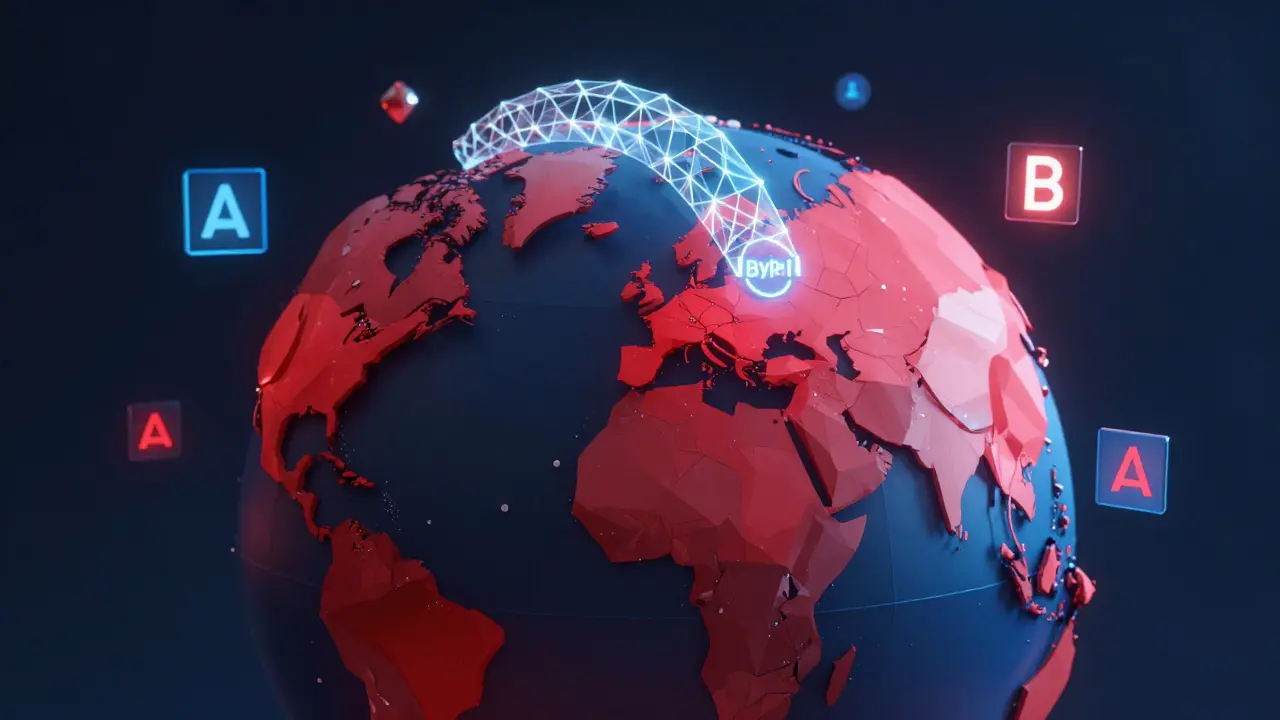
If you're trying to trade on Bybit from the United States or another restricted country, you've probably run into a wall. The platform blocks you before you even get to the login screen. That’s not a glitch. It’s Bybit geofencing-a system designed to keep users out based on where they’re connecting from. And if you think using a VPN will solve it, you’re not alone. But here’s the truth: it’s getting harder, and the risks are real.
How Bybit’s Geofencing Actually Works
Bybit doesn’t just guess where you are. It checks your IP address the moment you try to load the website or app. If that IP is registered in the U.S., Iran, Syria, Cuba, or a handful of other restricted countries, you’re locked out. No warning. No second chance. Just a blank page or an error message saying access is denied. This isn’t random. It’s a legal shield. After Binance paid $4.3 billion to settle with U.S. regulators in 2024, nearly every major offshore exchange had to choose: comply fully or build walls. Bybit picked walls. Instead of launching a U.S.-licensed version like Coinbase or Kraken, they decided to block U.S. traffic entirely. That means even if you’re an American citizen living abroad, if your device connects from a U.S. IP, you’re blocked. The system also checks your IP during login and sometimes during active trading sessions. If your location suddenly shifts-say, from Canada to the U.S.-the platform can log you out or freeze your account. It’s not just about sign-up. It’s continuous monitoring.Why VPNs Are the Go-To Workaround (And Why They’re Risky)
Most traders who can’t access Bybit turn to VPNs. And honestly, it’s easy. Buy a subscription to NordVPN, ExpressVPN, or Surfshark. Connect to a server in Singapore, the UK, or Japan. Open Bybit. Log in. Complete KYC with a passport from a permitted country. Done. But here’s what most people don’t realize: Bybit doesn’t just check your IP. It checks your ID. And if your ID says you’re from Germany but your payment method is linked to a U.S. bank, or your phone number is American, the system flags you. You might get in-but you’re playing with fire. In late 2024, CoinDesk found that hundreds of U.S. traders were successfully using this method. But they also found something worse: accounts getting frozen without warning. One trader from Texas told CoinDesk he’d been trading on Bybit for eight months using a Canadian passport and a German VPN. Then, out of nowhere, his $42,000 position was locked. No explanation. No appeal process. Just a message: “Account suspended due to compliance violation.” The problem? Bybit’s terms of service explicitly ban using VPNs to bypass geofencing. Violate that, and you’re not just breaking rules-you’re risking your entire balance. There’s no legal recourse. No customer service hotline that can override it. Once flagged, your funds can sit frozen indefinitely.How Good Is Bybit’s VPN Detection?
Short answer: Not great. Not yet. Right now, Bybit’s main tool is IP geolocation. If your IP looks like it’s from Singapore, you’re in. That’s it. Most commercial VPNs still work because they use legitimate server IPs that aren’t blacklisted. There’s no deep packet inspection. No browser fingerprinting. No analysis of connection timing or device behavior. Compare that to exchanges like Kraken or Coinbase-they’ve spent millions on advanced detection. They look at things like:- Does your device have known VPN apps installed?
- Is your browser language set to English but your system timezone set to Tokyo?
- Are you logging in from a data center IP (common with VPNs) instead of a residential one?
- Do your login patterns match a human-or a bot running 24/7 from a cloud server?
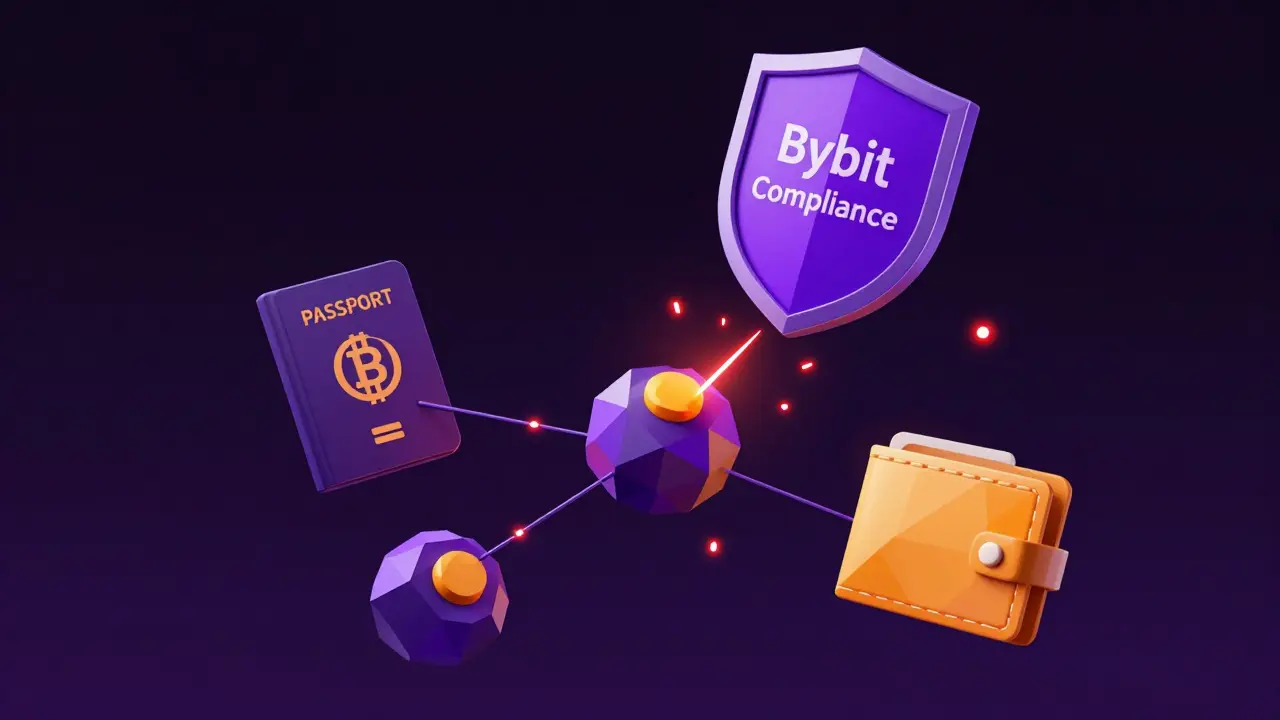
What Happens If You Get Caught?
Getting caught isn’t like getting a parking ticket. It’s permanent. If Bybit detects you’re using a VPN to bypass geofencing:- Your account gets suspended immediately
- Your funds are frozen
- You may be asked to submit proof of residency
- If you can’t prove you’re in an approved country, your account stays frozen-possibly forever
- You lose access to withdrawal functions, even if you own the funds
Who’s Affected the Most?
It’s not just Americans. Traders from countries under U.S. sanctions-like Iran, Syria, and Cuba-are completely locked out. But it’s also people in countries with unclear crypto laws: Nigeria, Argentina, Turkey, and even parts of the EU where local regulators are cracking down. A 2025 report from TRM Labs showed that 70% of global crypto exposure now comes from jurisdictions that tightened rules in 2023. That means more exchanges are doing what Bybit did: cutting off entire regions instead of navigating messy local laws. For traders in these places, the choice is simple: use a VPN and risk everything, or switch to an exchange that doesn’t care where you are. But even those exchanges are starting to follow suit. Bitget and OKX now block users from more countries than they did two years ago.
Alternatives to Bybit (Without the Geofencing Risk)
If you’re tired of the cat-and-mouse game, here are three real alternatives:- BitMEX-Still operates globally with minimal geofencing. No KYC required for basic trading. Not for beginners, but trusted by pros.
- Deribit-Based in Dubai. Doesn’t block users based on IP. Focuses on institutional traders but has low fees and deep liquidity.
- Phemex-Has geofencing, but fewer restricted countries than Bybit. Still allows access from many regions where Bybit doesn’t.
What’s Next for Bybit and Geofencing?
Bybit’s current system is a band-aid. It’s cheap to implement, but it’s not sustainable. As regulators demand tighter controls, they’ll push exchanges to do more than just block IPs. Expect to see:- Device fingerprinting-tracking your browser, OS, screen resolution, installed fonts
- Behavioral AI-analyzing how you place orders, how fast you trade, when you log in
- Two-factor geolocation-requiring your phone’s GPS to match your login IP
- Banking partner blacklists-blocking payments from U.S. banks even if you’re using a VPN
Final Reality Check
If you’re reading this because you want to use Bybit from a restricted country, here’s the truth: you can probably get in. But you can’t stay in safely. The platform is built for compliance, not convenience. Every feature-from KYC to withdrawal limits-is designed to satisfy regulators, not help you trade. And if they decide you’re a risk, they’ll shut you down without warning, without explanation, and without refund. The smarter move? Use an exchange that doesn’t force you to lie about where you live. Or, if you’re in the U.S., accept that you’ll need to use a licensed platform like Coinbase or Kraken. The fees are higher. The features are fewer. But your money stays safe. Geofencing isn’t going away. It’s getting smarter. And if you’re trying to beat it, you’re already losing.Can I use a VPN with Bybit without getting banned?
Technically, yes-many users do. But Bybit’s terms of service explicitly ban using VPNs to bypass geofencing. If detected, your account can be frozen permanently, and your funds may be lost. There’s no appeal process. It’s a high-risk gamble.
Why does Bybit block U.S. users but allow others?
The U.S. has some of the strictest crypto regulations in the world. Bybit chose not to pursue a U.S. license, which would require costly compliance, reporting, and oversight. Instead, they blocked U.S. traffic entirely to avoid legal penalties. Other countries have looser rules, so Bybit can operate there without the same risk.
Does Bybit check your ID during KYC?
Yes. During KYC, you must upload a government-issued ID like a passport or driver’s license. Bybit cross-references the country on your ID with your IP location. If they don’t match-say, you’re using a U.S. IP with a Canadian passport-you’ll likely be flagged. This is how many traders get caught even when using a VPN.
What happens if my Bybit account gets frozen?
Your account will be suspended with no warning. You’ll lose access to trading and withdrawals. You may be asked to prove your location, but even then, there’s no guarantee your funds will be released. Many users report never getting their money back after being flagged for geofencing violations.
Are there any crypto exchanges that don’t use geofencing?
Yes. Deribit and BitMEX have minimal or no geofencing. They focus on global access and don’t require KYC for basic trading. However, they’re more suited for experienced traders and may have fewer features than Bybit. Always check current policies-regulations change fast.
Will Bybit improve its VPN detection soon?
Yes. After the $1.4 billion hack in 2024, Bybit is under pressure to tighten security and compliance. Experts expect them to roll out advanced detection like device fingerprinting, behavioral AI, and GPS verification within the next 6-12 months. Using a VPN will become much riskier.
Edward Drawde
January 27, 2026 AT 13:57VPN? Lol. You think Bybit’s some dumb kid with a firewall? Nah. They’ve got AI watching your mouse movements now. Your account’s already flagged.
Nickole Fennell
January 28, 2026 AT 05:54OH MY GOD I JUST LOST $87K BECAUSE I USED A VPN FROM MY HOTEL IN SINGAPORE!! I WAS JUST TRYING TO TRADE!! WHY DO THEY HATE AMERICANS SO MUCH?? I’M JUST A GIRL WHO WANTS TO BUY DOGE!!
Richard Kemp
January 29, 2026 AT 00:40honestly i just use bitmex now. no kyc, no drama. if they block me i’ll switch to deribit. not worth the stress.
Will Pimblett
January 29, 2026 AT 01:55So let me get this straight-you’re mad because a company that explicitly bans VPNs… bans people who use VPNs? Brilliant logic. Next you’ll cry because your car got towed for parking in a no-parking zone.
Gurpreet Singh
January 29, 2026 AT 12:15Bro, I’m from India and I’ve been on Bybit since 2022. Used a Singapore VPN once-got flagged, lost $2k. Learned my lesson. Now I use Phemex. No drama, no panic. Just trade. Stay safe.
Christopher Michael
January 30, 2026 AT 23:27Let’s be real: Bybit isn’t the problem. The U.S. government is. They’ve turned crypto into a legal minefield. If you want to trade without fear, move to a country that doesn’t treat traders like criminals. Otherwise, stop complaining and use Coinbase.
Parth Makwana
January 31, 2026 AT 00:33Geofencing is merely a surface-layer compliance mechanism; the underlying paradigm is regulatory arbitrage avoidance. Bybit’s architecture reflects a strategic decoupling from high-risk jurisdictions-leveraging IP-layer enforcement as a cost-efficient deterrent against jurisdictional non-compliance. Behavioral analytics will soon supersede this, rendering VPNs obsolete as circumvention tools.
Elle M
January 31, 2026 AT 06:17Oh, so now it’s ‘unfair’ that a foreign company won’t let you break their rules to avoid U.S. laws? You think you’re special? Go use Kraken. Or better yet-move to a country that doesn’t need you to lie about your address.
Rico Romano
January 31, 2026 AT 21:06You’re all acting like this is some kind of civil rights issue. Newsflash: Bybit isn’t obligated to serve you. You’re not entitled to leverage. You’re not a ‘trader’-you’re a speculator with a credit card and delusions of grandeur. If you can’t follow the rules, don’t play.
Crystal Underwood
February 2, 2026 AT 19:55Y’all are so naive. They’re not just checking IPs. They’re scanning your browser for NordVPN extensions, your device for Tor, your typing rhythm for bot patterns. That $42k you ‘lost’? You were flagged the second you logged in with a German passport and a Texas phone number. You were a walking red flag.
Raymond Pute
February 4, 2026 AT 00:32Look, I get it-you want to trade crypto like it’s a video game. But here’s the thing: the whole system is designed to filter out the people who think they’re smarter than the regulators. You think you’re outsmarting them with a VPN? Nah. You’re just making yourself a target. The real winners? The ones who never tried to cheat in the first place. They’re the ones with their money still in their wallets, laughing at the drama.
Jack Petty
February 4, 2026 AT 18:22This is all part of the Great Crypto Purge. The deep state doesn’t want you owning assets outside their control. Bybit’s just the pawn. Next they’ll track your crypto wallet via your smart fridge. They’re coming for your private keys. Wake up.
Gustavo Gonzalez
February 5, 2026 AT 19:37They’re not even using AI yet. Wait till they integrate facial recognition with KYC and GPS spoofing detection. You’ll be locked out before you even open the app. This is just Phase 1. Phase 2? Your device gets blacklisted. Forever.
Mark Ganim
February 6, 2026 AT 08:50There’s a deeper truth here: we’re not fighting a company. We’re fighting the collapse of digital sovereignty. The internet was supposed to be free. Now, every click is a compliance checkbox. Bybit’s geofencing? It’s just the tip of the iceberg. Soon, every platform will be a gated garden-and we’ll thank them for it.
mary irons
February 6, 2026 AT 21:11I used to think VPNs were harmless. Then I watched my friend’s $120k account vanish. No warning. No email. Just… gone. Now I only use exchanges that don’t pretend to be ‘fair.’ If they want you gone, they’ll make it obvious. No tricks. No lies. Just silence.