
Bitcoin Tax Haven: Understanding El Salvador's No Capital Gains Tax Policy
Imagine selling a massive amount of Bitcoin and keeping every single cent of the profit without sending a dime to the taxman. For most people, that sounds like a fantasy or a risky legal gamble. But in El Salvador is the first country in the world to make Bitcoin legal tender, this is the actual law of the land. By removing the no capital gains tax on Bitcoin, the government has essentially turned the country into a sanctuary for crypto holders.
The Core of the Bitcoin Tax Exemption
The magic happens because of the Digital Assets law. In most countries, if you buy Bitcoin at $30,000 and sell it at $60,000, the government wants a piece of that $30,000 gain. El Salvador doesn't. They have specifically recognized zero capital gains tax on Bitcoin transactions. This isn't just a loophole; it's a state-level strategy to attract wealth and technology.
If you're a foreign investor, the deal gets even sweeter. There is a specific incentive for those who bring significant capital into the country. If you invest over ₿3 (three Bitcoin), you become eligible for complete capital gains tax exemptions on your profits. It's a straightforward move: bring your Bitcoin to El Salvador, and the government will leave your gains alone.
Who Controls the Rules?
You can't just set up a shop and call it a day. The National Commission of Digital Assets, also known as CNAD, is the regulatory body that oversees cryptocurrency operations and issues licenses. If you want to run a business there, you have to fit into one of two buckets:
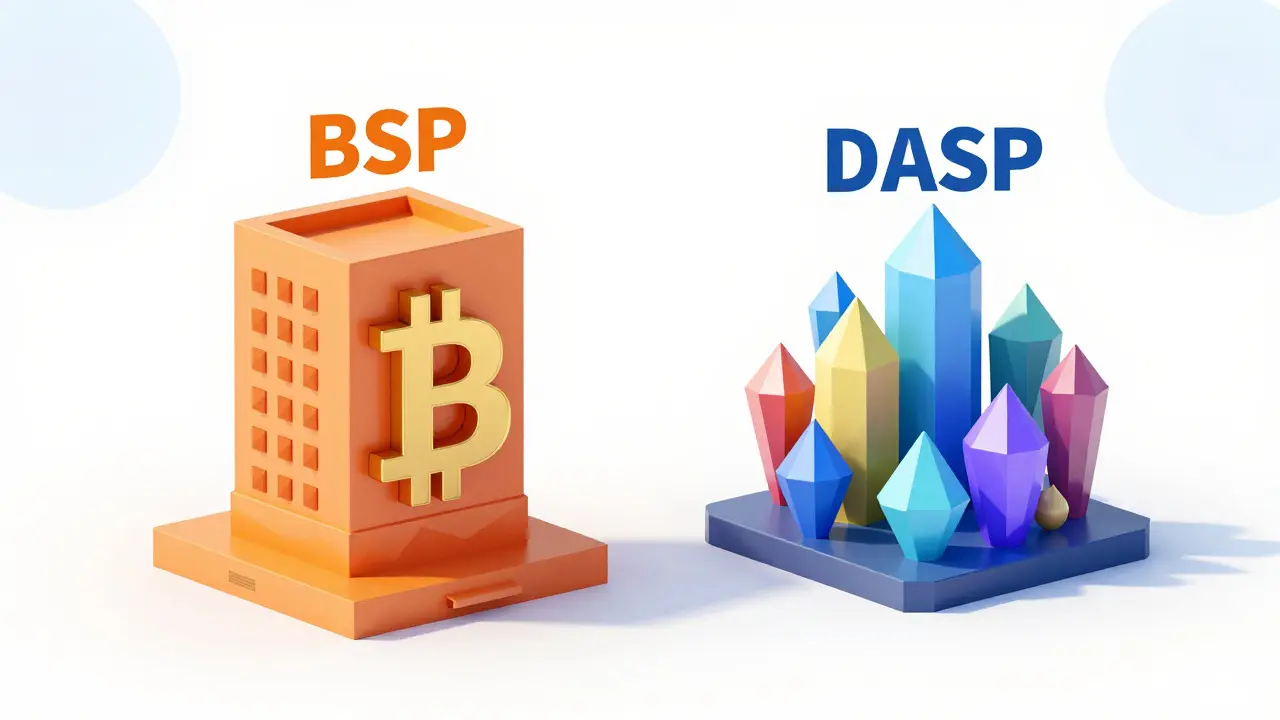
- Bitcoin Service Provider (BSP): This is for the purists. If your business only deals with Bitcoin-think payment processing, custodial wallets, or BTC-only exchanges-this is your license.
- Digital Asset Service Provider (DASP): This is for the broader market. If you handle Ethereum, Solana, NFTs, or any other digital asset, you need a DASP license.
Beyond just the tax on gains, the government's LEAD program offers a massive break for crypto companies. These businesses can get exemptions from corporate income tax, municipal taxes, and services transfer tax. It's a full-scale invitation for the blockchain industry to relocate.
| Country | Tax on Capital Gains | Key Condition / Feature |
|---|---|---|
| El Salvador | 0% | Bitcoin is legal tender; special ₿3 investor rule |
| Cayman Islands | 0% | No corporate or income tax overall |
| UAE | 0% | Zero tax across all emirates with clear regulation |
| Germany | 0% | Must hold assets for at least 12 months |
| Portugal | 0% | Tax-free for long-term gains; NHR program benefits |
The IMF Shift: What Changed in 2025?
It hasn't been all smooth sailing. In December 2024, El Salvador signed a $1.4 billion loan agreement with the International Monetary Fund (known as the IMF), which is a major global organization that monitors financial stability and provides loans to member countries. The IMF didn't love the "wild west" nature of the Bitcoin law, so they pushed for changes.
By February 2025, an amended law was passed. Here is what actually changed: the government slowed down its own Bitcoin purchases, merchants are no longer legally forced to accept Bitcoin, and you can't pay your taxes using Bitcoin anymore. The state-sponsored Chivo wallet is also being phased out. However, here is the most important part for investors: the zero capital gains tax on Bitcoin remains untouched. The government gave in on the operational side to satisfy the IMF, but they kept the tax haven status to keep the investors coming.
Real-World Adoption vs. The Hype
Is everyone in El Salvador actually using Bitcoin? Not exactly. Data from the Iudop (a research institute at the UCA university) shows a surprising trend. While the government is all-in, the locals have cooled off. Adoption rates were around 25.7% in 2021, but by 2024, that number dropped to just 8.1%.
This creates a weird paradox. On one hand, the country is a global magnet for "Bitcoin whales" because of the tax laws. On the other hand, the average person in San Salvador is still leaning on the US Dollar. Even so, the government's own portfolio has seen gains. By March 2024, their holdings were up roughly 50% as Bitcoin climbed past $69,000, though they are still recovering the initial costs of the rollout.
How to Actually Use the Tax Framework
If you're planning to move your operations to El Salvador to take advantage of these rules, you can't just fly in and ignore the paperwork. Even though you aren't paying capital gains tax, you still have to follow the rules of the game. You'll need to:
- Register with CNAD: Apply for either the BSP or DASP license depending on what you're trading.
- Maintain Clean Records: The Ministry of Finance still wants to see your annual financial statements.
- KYC/AML Compliance: You must follow "Know Your Customer" and "Anti-Money Laundering" protocols. You aren't paying tax, but you are still required to prove your money isn't coming from illegal activities.
- Declare VAT: While many things are exempt, you still need to declare Value Added Tax where it applies to your business services.
For the ultra-wealthy, the future looks like "Bitcoin City." This project aims to be a complete tax haven where there are no taxes on income, property, or even emissions. It's essentially a city-state designed specifically for the crypto elite.
Do I need to live in El Salvador to get the 0% capital gains tax?
While the tax laws apply to transactions within the country's jurisdiction, foreign investors who invest ₿3 or more in the country are specifically eligible for these exemptions. However, your own home country may still try to tax your global income, so you should check your local residency laws.
Does the zero tax apply to Ethereum or Solana?
The legal tender status and the specific "no capital gains" push are centered on Bitcoin. Other assets fall under the DASP (Digital Asset Service Provider) framework. While El Salvador is very crypto-friendly, the strongest legal protections and exemptions are reserved for Bitcoin.
Did the IMF agreement remove the tax benefits?
No. The 2024-2025 IMF agreement led to changes in how the government buys Bitcoin and how merchants accept it, but the core exemption for capital gains tax on Bitcoin transactions was preserved.
What is the difference between a BSP and a DASP license?
A BSP (Bitcoin Service Provider) license is exclusively for businesses dealing only with Bitcoin. A DASP (Digital Asset Service Provider) license is for those dealing with any other cryptocurrency, NFTs, or digital tokens.
Is the Chivo Wallet still mandatory?
No. As part of the modifications following the IMF agreement, the government has wound down its involvement in the mandatory nature of the Chivo wallet and the requirement for merchants to accept Bitcoin.
Shantal Sanjur
April 18, 2026 AT 16:53Oh sure, just move all your money to a place with zero oversight and everything will be fine. It is so obvious that this is just a giant honeypot designed to trap whales while some shadow government uses the infrastructure to launder billions. The whole 'Bitcoin City' thing is basically a Bond villain plot in real life, but everyone is too blinded by 0% tax to see the strings. Wake up people, the IMF didn't 'push' for changes, they just wanted to make sure the backdoor was wide enough for their own interests before the collapse happens. It is all a game and we are just the pawns thinking we found a loophole.
Joshua Salwen
April 19, 2026 AT 12:18Srsly?? People actually think this is viable?? Like, imagine thinking a govt that literally just begged the IMF for a loan can actually maintain a 'tax haven' status without some massive catch. It is absolutely hilarios that anyone would trust this!! The sheer audacity of the marketing for Bitcoin City is practically a work of art in delusion. Absolute joke.
Kevin Lư
April 20, 2026 AT 19:36Seems kind of selfish to just dodge taxes while the rest of the world pays for roads and schools, but hey, do what you want!
Shannon Kelly Smith
April 21, 2026 AT 13:23This is such a great way to onboard more people into the ecosystem! 🚀 The ₿3 rule is a clever incentive to keep liquidity in the country. Let's see how it evolves! 📈💎
John and Lauren Busch
April 22, 2026 AT 21:32Nice little paradise for the rich. Classic.
Michelle Stanish
April 24, 2026 AT 04:39I don't think this will work long term.
Kim Smith
April 26, 2026 AT 03:30It is really fascinatin how we try to map out these old world concepts like taxes and national borders onto a technology that was literally born to ignore them... like the very essence of decentralized finance is to move away from the state but here we have a state trying to co-opt it by creating this weird hybrid sanctuary where the wealthy can just drift away from their civic duties while the local population in San Salvador still struggles with the basic volatility of the dollar. Maybe the real value isnt in the 0% tax but in the experiment of seeing if a country can actually survive as a node in a global network rather than a sovereign entity with its own currency, though i suspect the human element of greed will always smudge the beauty of the original code.
Adedamola Oyebo
April 27, 2026 AT 21:26The DASP license is crucial!! Most people forget about the non-BTC assets!!
Mike Kempenich
April 28, 2026 AT 12:07I'm optimistic about this move. Even if adoption is slow for locals, the capital influx from whales will eventually trickle down into the local economy through infrastructure and jobs.
Jeff Barlett
April 28, 2026 AT 14:13Wait, so we are just ignoring the fact that adoption dropped to 8%? That is a complete failure of a policy! But sure, let's focus on the 0.1% of people who can afford 3 BTC. Pure comedy!
Chintu Parikh
April 30, 2026 AT 05:51I believe it is most prudent to view this as a collaborative effort between technology and governance. We should certainly encourage such innovative frameworks that seek to attract global investment for the benefit of the nation's development.
Saurav Bhattarai
May 1, 2026 AT 23:22Imagine thinking El Salvador is the only place with no tax. My country has far more sophisticated ways of handling wealth, though I suppose for the Americans, this little experiment is 'revolutionary'. How quaint.
Gillian Kent
May 3, 2026 AT 14:15I think its lavely that they are tryin to be more open to the world even if the paper work is a bit laoty.
Kaitlyn Wu
May 3, 2026 AT 15:02Just a reminder to everyone reading this: moving your assets doesn't automatically exempt you from your home country's tax laws. Do not confuse local exemptions with global tax compliance.
nikki krinkin
May 5, 2026 AT 03:04It's interesting to see the shift in the IMF's stance over the last year. It seems like a compromise that lets both sides save face.
Mark Pfeifer
May 6, 2026 AT 13:58The distinction between BSP and DASP is actually quite logical from a regulatory standpoint, separating the core asset from the speculative altcoin market.
Keri Pommerenk
May 6, 2026 AT 21:52sounds like a good plan for anyone with enough btc to make it worth the move