
Automatic Exchange of Crypto Tax Information Between Countries: What You Need to Know in 2025
Crypto Tax Calculator
Calculate Your Tax Liability
Your Tax Liability
Based on CARF reporting standards effective January 2026
Important Notice
For the first time in history, your crypto trades might be automatically shared with your home country’s tax agency-even if you bought Bitcoin on a platform based halfway across the world. This isn’t science fiction. It’s happening now, and by January 1, 2026, it will be mandatory in the European Union and over 60 other countries. If you’ve ever traded, staked, or swapped crypto, this change affects you. No more hiding behind anonymous wallets or offshore exchanges. The global tax net is closing in-and it’s digital, fast, and hard to avoid.
How the System Actually Works
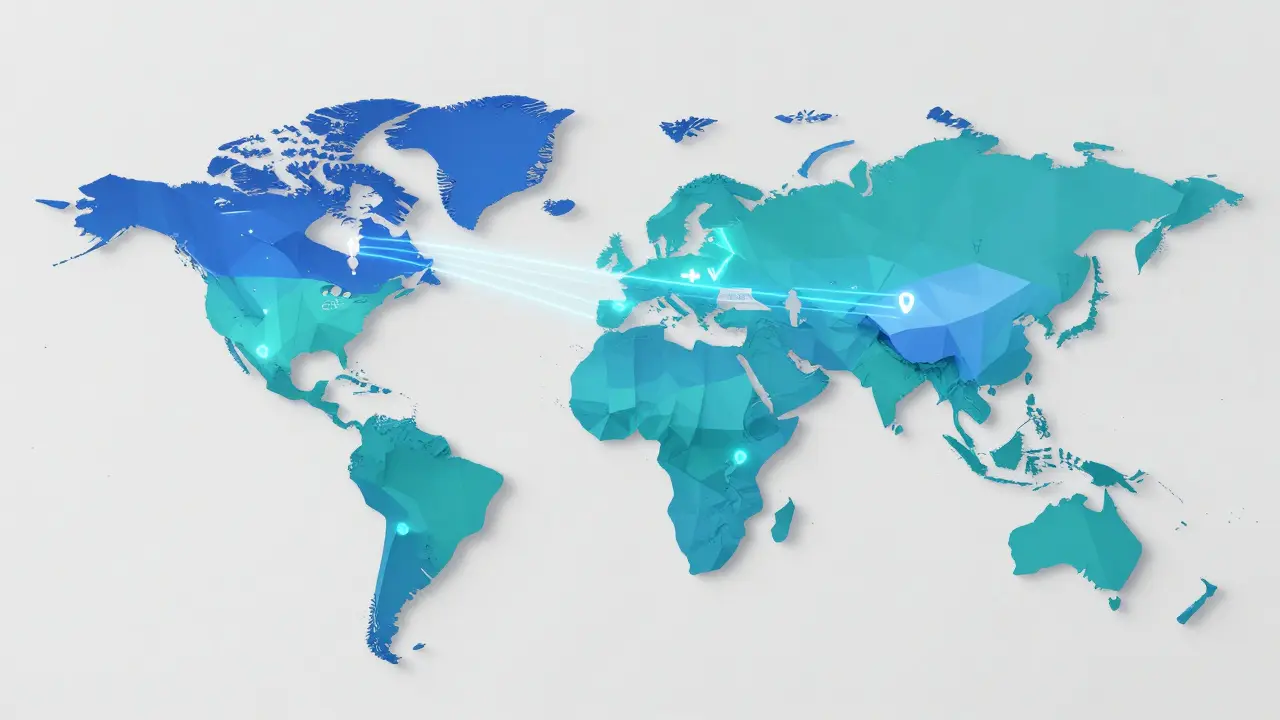
The engine behind this global shift is called the Crypto-Asset Reporting Framework, or CARF. It was created by the OECD, the same group that runs the Common Reporting Standard (CRS) for bank accounts. Think of CARF as CRS for crypto. Instead of banks reporting your savings to foreign tax authorities, now crypto exchanges, wallets, and even decentralized finance platforms must report your transactions. Here’s how it flows:- You make a trade on Binance, Kraken, or even a DeFi protocol like Uniswap.
- If the platform is based in a CARF-participating country, it collects your name, address, tax ID, and details of every crypto transaction-buys, sells, swaps, staking rewards, airdrops, even NFT sales.
- That data is sent to your country’s tax authority once a year, in a standardized digital format (XML).
- Your home country matches this with your tax return. If you didn’t report the gain? They’ll know.
Who’s Covered-and Who Isn’t
As of late 2025, 67 countries have committed to implementing CARF by 2028. That includes every major economy: the entire European Union, the UK, Canada, Australia, Japan, South Korea, Singapore, and more. The EU’s version, called DAC8, kicks in on January 1, 2026. That means EU residents must start reporting crypto gains for the 2026 tax year, even if they traded on a U.S.-based exchange. The U.S. is a special case. It doesn’t adopt CARF directly, but it has its own rules. The IRS now requires non-U.S. crypto brokers to report on U.S. customers. In return, the U.S. shares data on Americans who trade on foreign platforms. So even if you live in New Zealand and trade on Coinbase (a U.S. company), your info goes to the IRS-and then to New Zealand’s Inland Revenue Department if you’re a resident. But not everyone is on board. Some jurisdictions still resist full transparency. Places like the Cayman Islands, certain Caribbean islands, and parts of the Middle East haven’t committed. That doesn’t mean you’re safe. If you’re a resident of a CARF country, your home tax authority doesn’t care where you traded-they’ll still get your data from the platform’s home country.What Exactly Gets Reported
It’s not just “I bought Bitcoin.” The reporting is detailed. Here’s what platforms must collect and send:- Your full legal name and residential address
- Your tax identification number (TIN) or equivalent
- Every crypto-to-fiat sale (e.g., BTC to USD)
- Every crypto-to-crypto trade (e.g., ETH for SOL)
- Staking rewards, yield farming income, and mining payouts
- Airdrops received through platform accounts
- NFT sales and purchases if done via a regulated service
- Transfer details: from which wallet, to which wallet, and the value at time of transfer

Why This Is a Game Changer
Before CARF, crypto tax evasion was easy. You could trade on unregulated platforms, use mixers, or hold assets in wallets with no KYC. Tax agencies had no way to track it. Now, the system is designed to close every major loophole. The OECD didn’t build this from scratch. They studied the CRS, which has been collecting bank data since 2014. Over 110 countries use it. It worked. Now they’ve adapted it for crypto. The XML format is the same. The reporting deadlines are similar. The penalties for non-compliance? Also similar. This isn’t just about catching tax evaders. It’s about legitimacy. Governments want crypto to be part of the financial system-not a parallel economy. By forcing transparency, they’re making crypto trading as visible as stock trading. That’s good for long-term adoption. It’s bad for people who thought they could avoid taxes.What This Means for You
If you’re a crypto user in a CARF country, you have three choices:- Comply. Keep detailed records of every transaction. Use tax software like Koinly, CoinTracker, or TokenTax to calculate gains and losses. File your return accurately. This is the only safe path.
- Ignore it. Hope you don’t get caught. Risky. Tax agencies now have AI tools that cross-reference crypto reports with bank deposits and lifestyle spending. If your income jumps 40% and you didn’t report it? You’re on their radar.
- Move. Relocate to a non-CARF country. But even then, if you’re a tax resident of a CARF country, they still have jurisdiction over your global income. You can’t outsource your tax liability by moving your body.

What Platforms Are Doing to Comply
Major exchanges like Binance, Coinbase, and Kraken are already building CARF-compliant systems. They’re upgrading their KYC processes, adding fields for tax IDs, and restructuring their reporting pipelines. Smaller platforms are struggling. Many don’t have the tech or legal team to handle it. Some platforms are choosing to block users from CARF countries entirely. Others are partnering with third-party tax reporting firms to automate the process. The cost of compliance is high-but the cost of non-compliance is higher. Fines can reach 100% of the unreported gain. In some countries, it’s criminal. The real challenge? Decentralized finance. CARF applies to “Reporting Crypto-Asset Service Providers.” That means centralized platforms. But if you swap tokens directly on a smart contract, who reports? The answer? No one-yet. But tax agencies are watching. They’re developing new tools to track on-chain activity. The next step may be blockchain analytics firms feeding data directly to tax authorities.What to Do Now
Don’t wait for an audit letter. Start now:- Export your complete transaction history from every exchange and wallet you’ve used since 2020.
- Use a crypto tax tool to calculate your gains and losses. Don’t guess.
- File any missing returns for past years. Many countries have voluntary disclosure programs with reduced penalties.
- Keep records for at least seven years. That’s the standard audit window in most CARF countries.
- Know your tax residency. If you live in New Zealand, Australia, or the UK, you’re taxed on worldwide income. Where you trade doesn’t matter.
The Bigger Picture
This isn’t just about taxes. It’s about the future of money. Crypto was born as a way to escape control. But now, governments are using the same technology to bring it under control. Blockchain’s transparency is being turned against its users. The good news? You don’t have to be afraid of the system. You just have to be prepared. Pay your taxes. Keep good records. Stay compliant. Crypto isn’t going away. And neither is the taxman.Does CARF apply to me if I live in New Zealand?
Yes. New Zealand is one of the 67 jurisdictions committed to implementing CARF by 2028. Even if you trade on U.S.-based platforms like Coinbase, your transaction data will be shared with Inland Revenue. You’re required to report all crypto income on your tax return, regardless of where the trade occurred.
What if I use a non-custodial wallet like MetaMask?
If you only use non-custodial wallets and never trade through a regulated exchange or DeFi platform that’s CARF-compliant, then technically, no one reports your transactions. But if you ever cash out to a bank account, buy goods with crypto, or use a centralized service-even once-that’s a data point tax authorities can trace. Don’t assume anonymity is guaranteed.
Do I need to report crypto staking rewards?
Yes. Staking rewards, yield farming income, and airdrops are treated as taxable income in most CARF countries. The platform that paid you will report the value in your local currency at the time you received it. That’s the amount you must declare as income.
What happens if I didn’t report crypto gains in past years?
Many countries offer voluntary disclosure programs. If you come forward before being audited, you can often pay back taxes with reduced or no penalties. Waiting until you’re caught means higher fines, possible criminal charges, and public exposure. The sooner you act, the better your outcome.
Is there a way to avoid CARF reporting?
There’s no legal way to avoid it if you’re a tax resident of a participating country. Trying to hide transactions through mixers, offshore exchanges, or shell companies is risky and increasingly ineffective. Tax agencies now use blockchain analytics tools that can trace even complex flows. The only safe approach is compliance.
Kurt Chambers
December 11, 2025 AT 12:11Kelly Burn
December 13, 2025 AT 10:19Vidhi Kotak
December 14, 2025 AT 09:31Steven Ellis
December 16, 2025 AT 08:22Kathy Wood
December 16, 2025 AT 12:06Rakesh Bhamu
December 16, 2025 AT 15:13Madison Surface
December 16, 2025 AT 21:56Tiffany M
December 17, 2025 AT 19:27Eunice Chook
December 17, 2025 AT 20:01Lois Glavin
December 17, 2025 AT 20:25Scot Sorenson
December 18, 2025 AT 12:13Ike McMahon
December 19, 2025 AT 09:05JoAnne Geigner
December 21, 2025 AT 07:29